
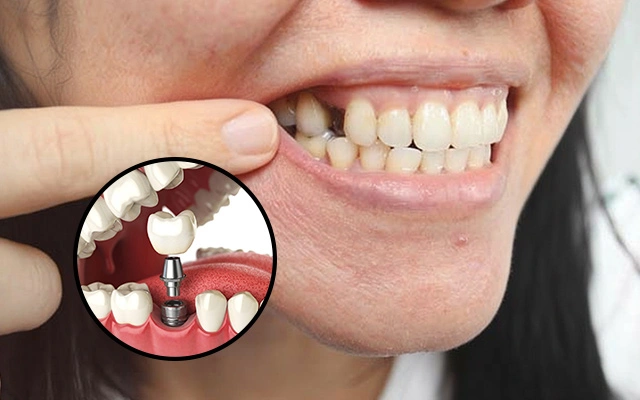
Losing a tooth often feels like something you can deal with later. It doesn’t hurt. It may not even be visible. Many people continue their daily lives, assuming the gap is harmless. The truth is very different. Dentists worldwide confirm that a missing tooth begins to damage nearby teeth and the jawbone almost immediately.
Patients visiting Magic Smile Dental Clinic for dental implants in Newtown are often surprised to learn that the biggest danger isn’t the gap itself, but the changes happening around it.
Ignoring tooth loss is not a cosmetic decision. It is a structural one. And the longer it is delayed, the harder the mouth has to work to compensate.
Today’s blog will discuss why delaying dental implantation (when you have a missing tooth) can damage your nearby teeth. So let’s dive in.
One Missing Tooth Leads To Bigger Problems Than You Think
Even one missing tooth disrupts the balance of the mouth. Teeth shift, bone begins shrinking, and bite pressure changes. These slow reactions increase long-term risk to surrounding teeth and jaw health.
Many people across India believe a single missing tooth is manageable. If chewing feels normal and there is no pain, treatment feels optional. However, dentists encounter long-term missing-tooth problems every day. Teeth are designed to function as a connected unit. When one component disappears, the system begins to adjust in ways that weaken the entire structure.
The first stage is subtle. Food traps more easily. Cleaning becomes harder. The bite feels slightly different. Because these changes are gradual, most people ignore them until visible damage appears.
Common early signs
These are warning signals that the mouth is already adapting.
- Food that gets stuck in new areas
- Teeth feel slightly uneven
- Increased plaque around the gap
- Sensitivity while chewing
What Happens When a Tooth Is Missing?
Teeth support each other like a framework. Losing a tooth removes that support, causing the surrounding teeth to lose stability and the jawbone to begin shrinking due to a lack of stimulation.
Dental anatomy is built on balance. Each tooth shares pressure during chewing. Remove one, and neighbouring teeth absorb extra force. This imbalance explains the long-term effects of missing teeth documented in clinical research.
The jawbone also depends on tooth roots for stimulation. Without that signal, the body assumes the bone is no longer needed and begins reabsorbing it. This process is slow but irreversible without treatment.
Refer to the table below for a clearer picture
| Stage | Internal Change | Result |
| Early | Teeth drift | Bite imbalance |
| Middle | Bone shrinkage | Weak support |
| Late | Jaw strain | Complex treatment needed |
This progression is why dentists emphasise early replacement.
The Hidden Cost of Waiting: How Delaying Dental Implants Affects Nearby Teeth
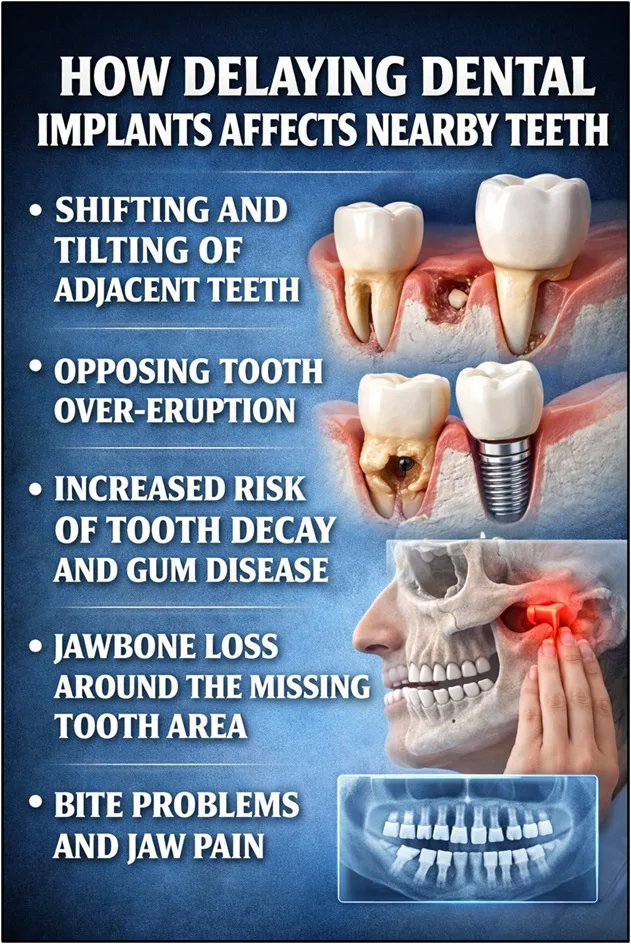
Delaying replacement allows surrounding teeth and bone to deteriorate. Movement, decay risk, bone loss, and jaw strain increase steadily. Longer delays often mean more complex and expensive future treatment.
The dental implant delay risks follow a predictable pattern. The mouth adapts, but that adaptation causes damage.
Shifting and Tilting of Adjacent Teeth
Teeth next to the gap slowly move inward. This causes crowding, twisting, and uneven spacing. Over time, nearby teeth shifting after tooth loss can change how your bite closes. Brushing and flossing become less effective, increasing the risk of decay.
Patients often notice new food traps first. That is movement already in progress.
Opposing Tooth Over-Eruption
The tooth in the opposite jaw grows into the empty space because it has nothing to bite against. This disrupts alignment and increases pressure on surrounding teeth. Chewing becomes uneven and tiring.
This movement continues until corrected.
Increased Risk of Tooth Decay and Gum Disease
Misaligned teeth create plaque traps. These hard-to-clean zones raise the risk of cavities and gum infections. Many patients treat gum problems without realising the root cause is an untreated missing tooth.
Jawbone Loss Around the Missing Tooth Area
Scientific studies confirm that bone loss after tooth extraction begins within months. The jawbone weakens without root stimulation. Over time, this makes implant placement more difficult and may require additional procedures.
Bite Problems and Jaw Pain
Uneven pressure strains the jaw joint. This can lead to headaches, muscle fatigue, and faster wear of remaining teeth. Patients often report chewing discomfort, especially on one side.
Dental Implants: The Best Choice for Long-Term Tooth Replacement
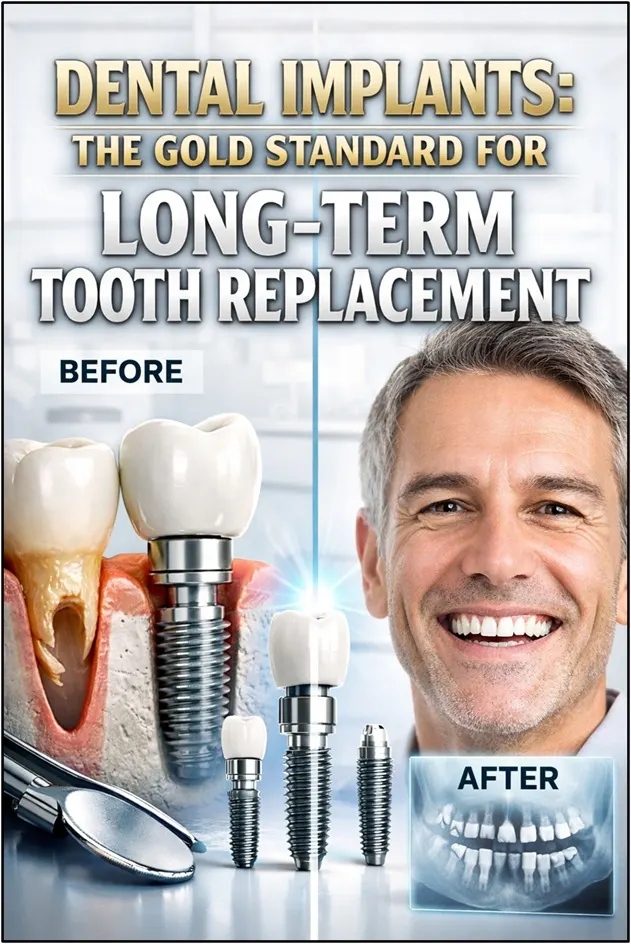
Dental implants replace both the tooth and its root, preserving bone, stabilising nearby teeth, and restoring natural chewing. They protect the mouth structurally, not just cosmetically.
Among modern tooth replacement options in India, implants most closely replicate natural teeth. Unlike bridges, implants do not rely on neighbouring teeth for support.
Here’s a comparison between Implants & Bridges
| Feature | Dental Implants | Bridges |
| Bone preservation | Yes | No |
| Impact on nearby teeth | None | Teeth must be reduced |
| Longevity | Long-term | Moderate |
| Stability | Natural feel | Supported by adjacent teeth |
This is why dentists frequently compare dental implants vs bridges when planning treatment. Implants protect the jaw, not just fill a gap.
Choosing dental implants in Newtown early on helps prevent long-term complications and preserves natural chewing strength.
The Right Time to Consider a Dental Implant
The best time to replace a missing tooth is as soon as healing allows. Early treatment is simpler, faster, and more predictable. Delays increase complexity and may require bone grafting.
Many patients ask when to get dental implants. The safest answer is: before structural changes progress. Early placement reduces cost, treatment time, and surgical complexity.
Delays can lead to bone shrinkage and tooth movement, which may require corrective procedures. Acting early protects both health and finances.
People searching for the best dental implant clinic in Kolkata often arrive after years of delay. While treatment is still possible, earlier care would have been easier.
Timely replacement with dental implants in Newtown preserves the natural architecture of the mouth.
Let’s Recap
Ignoring a missing tooth damages more than appearance. It weakens nearby teeth, shrinks bone, and strains the jaw. Timely implants protect the entire mouth and prevent escalating treatment needs.
A missing tooth is not a harmless gap. It is the starting point of a structural chain reaction. The good news is that modern dentistry offers reliable solutions. Replacing the tooth early prevents damage from spreading.
Patients choosing dental implants at Magic Smile Dental Clinicin Newtown protect their bite, jawbone, and long-term oral health. Acting now is always easier than repairing years of neglect.
Your smile is a system. Protecting one tooth protects them all.
People Also Ask
Can a dental implant affect a tooth next to it?
A properly placed dental implant does not damage adjacent teeth. Unlike bridges, implants stand independently in the jawbone, preserving neighbouring teeth and helping maintain natural spacing, bite balance, and long-term structural stability.
Can I delay dental implants?
Delaying dental implants is possible, but it increases the risk of bone shrinkage, tooth movement, and bite problems. The longer the delay, the more complex the treatment becomes, sometimes requiring additional procedures before an implant can be safely placed.
Can a missing tooth affect other teeth?
Yes. A missing tooth allows nearby teeth to shift into the empty space and opposing teeth to overgrow. This movement disrupts alignment, increases cleaning difficulty, and raises the risk of decay, gum disease, and uneven bite pressure.
What are the disadvantages of not replacing a missing tooth?
Not replacing a missing tooth can lead to bone loss, shifting teeth, bite imbalance, jaw strain, and higher cavity risk. Over time, these changes weaken the surrounding teeth and may require more complex, expensive dental treatment.