
Orthodontic Treatment in Kolkata
Correct your bite, perfect your smile, and boost your confidence.
RCT
Veneers
Implants
Patients
What is Orthodontic Treatment?
Orthodontic treatment focuses on straightening teeth and correcting misaligned bites (malocclusions). This helps improve both oral health and the appearance of your smile.
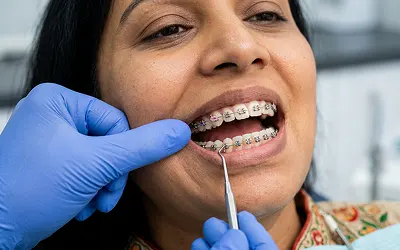
Types of Orthodontic Treatment
| Treatment | Description | Suitable For | Expected Duration |
|---|---|---|---|
|
Traditional Metal Braces
|
The most common type of braces, made of metal brackets and wires. | Children, teenagers, and adults with severe misalignment. | 18-36 months |
|
Ceramic Braces
|
Similar to metal braces but use tooth-colored or clear materials. | People who want a more discreet option. | 18-36 months |
|
Clear Aligners
|
Transparent trays that gradually shift teeth into alignment. | Adults and teenagers with mild to moderate misalignment. | 6-18 months |
|
Lingual Braces
|
Braces placed behind the teeth, making them invisible. | Adults who need a discreet treatment option. | 18-36 months |
|
Self-Ligating Braces
|
Braces that use a special clip instead of elastic bands to hold the wire. | Those who need faster treatment or less frequent adjustments. | 18-24 months |
Why Choose Magic Smile Dental Clinic?
Modern Infrastructure
Wide Range of Services
ISO Certified Clinic
100% Patient-Centric
Personalised Dental Care
Digital Smile Design
The Visionary Minds Behind Magic Smile
Our leadership team brings decades of expertise, blending clinical mastery with patient focus. Their dedication ensures each patient receives the best treatment in a welcoming, comfortable environment.
- Clinical Mastership in Aesthetic Dentistry (Mum)
- Certified Implantologist- Osteem (S.korea)
- Asso. Fellowship in Laser Dentistry (WCLI - USA)
- Certified Implantologist- Dentium (MUM)
- Asso. Fellowship in Laser Dentistry (WCLI - USA)
Treatment Process (Step-by-Step)
Initial Consultation
The orthodontist evaluates your teeth, discusses your treatment options, and creates a personalised plan.
Treatment Planning
A detailed treatment plan is created, including the type of braces or aligners that suit your needs.
Fitting the Braces or Aligners
The orthodontist fits your braces or provides your first set of aligners, ensuring proper adjustments.
Regular Check-Ups
You'll need to visit the orthodontist regularly for adjustments, wire-tightening, or new aligners to keep your progress on track.
Final Stage & Retainers
Once treatment is complete, you'll wear retainers to maintain your new smile and prevent teeth from shifting.
Benefits of Orthodontic Treatment

Straightens misaligned teeth for improved bite and function.

Enhances the appearance of your smile and boosts self-confidence.

Reduces the risk of tooth decay and gum disease.

Improves overall oral health by making cleaning and maintenance easier.

Helps prevent or reduce issues like jaw pain, headaches, or teeth grinding.
Recovery Timeline
Traditional Metal Braces
Noticeable but effective in straightening teeth.
Ceramic Braces
Less visible, but similar to metal braces.
Clear Aligners
Comfortable, discreet, and removable for convenience.
Lingual Braces
Hidden behind teeth, slightly uncomfortable initially.
Self-Ligating Braces
Faster adjustments, less discomfort than traditional.
Risks & Safety Measures
Risks
Temporary discomfort or pain, especially after adjustments.
Risk of plaque buildup and tooth decay if braces are not cleaned properly.
Mouth sores or irritation from brackets or wires.
Potential for broken or loose brackets.
Safety Measures
Avoid sticky or hard foods to prevent damage to the braces.
Maintain good oral hygiene by brushing and flossing regularly.
Use orthodontic wax to prevent irritation on the inside of your cheeks.
Wear a mouthguard if playing contact sports.
Frequently Asked Questions
How long does orthodontic treatment take?
The duration depends on the severity of your condition and the type of treatment, typically lasting between 6 months and 3 years.
Do braces hurt?
Braces may cause mild discomfort or soreness after adjustments, but this typically subsides within a few days.
What are clear aligners, and how do they work?
Clear aligners are transparent, removable trays that gradually shift your teeth into alignment without the need for traditional braces.
Are there any age restrictions for orthodontic treatment?
Orthodontic treatments are suitable for both children and adults, with options personalised to different age groups and needs.
What is the difference between traditional braces and clear aligners?
Traditional braces are fixed, metal devices, while clear aligners are removable, discreet trays that align teeth gradually.