
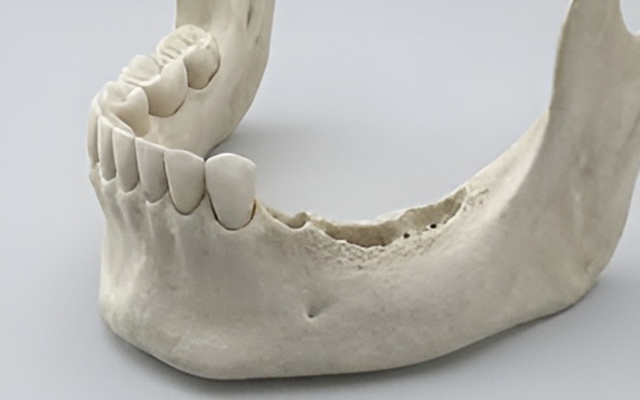
A beautiful smile is a major confidence booster, but your teeth do much more than just help you smile and chew. They play a critical role in holding your entire facial shape together. When you lose a tooth, a hidden process begins beneath your gums that slowly changes your jawbone and your facial contours.
Understanding these hidden structural changes can help you make informed choices about your health, including advanced treatments like dental implants.
With 500+ implants performed and 8000+ satisfied customers, Magic Smile Dental Clinic in Kolkata is here to help you achieve a brighter, healthier smile.
What Happens to Your Jawbone When You Lose a Tooth?
Your teeth are held tightly in place by a specific part of your jawbone called the alveolar ridge. The roots of your teeth are connected to this bone through a soft, specialised network of tissues known as the periodontal ligament.
Every time you bite down or chew, your teeth exert mechanical pressure deep into your jawbone. This chewing action provides constant mechanical stimulation to the living bone tissue. The stimulation acts as a signal, telling your body to continuously send vital nutrients, calcium, and healthy blood flow to your jaw to keep it dense and strong.
The Real Cause of Jawbone Shrinkage
When you lose a tooth because of deep decay, injury, or gum disease, this necessary chewing pressure stops immediately. Because there is no longer any physical force moving through the space, your body assumes that this section of bone is no longer needed. This triggers a biological process called alveolar ridge resorption.
Your body begins to break down the unused bone tissue and recycles its minerals elsewhere. Special cells called osteoclasts dissolve the bone matrix, leading to rapid jawbone atrophy and a permanent drop in your local bone density.
- The Critical First Year: The most significant bone loss occurs during the first year after tooth loss. Research suggests that the alveolar ridge may lose approximately 50% of its width within 12 months, with nearly 30% (a 3.8-mm change) occurring during the first 12 weeks alone.
- The Long-Term Damage: The bone continues to shrink year after year, making it harder to fix your smile later.
- The Danger to Other Teeth: The surrounding bone weakens, which causes your remaining teeth to shift out of place, lean over, or become loose.
Can Missing Teeth Cause Your Face to Collapse?

Yes, missing teeth directly cause a medical condition known as facial collapse due to progressive jawbone atrophy.
Your jaw serves as a vital structural frame that physically supports your lips, cheeks, and facial muscles. When jawbone atrophy is left untreated, it triggers a visible domino effect across your entire profile.
What Your Face Goes Through
| The Stages | The Structural Process Inside Your Mouth | How It Alters Your Visible Facial Appearance |
| Stage 1: Tooth Loss | The bone immediately loses its natural root stimulation. | Gaps appear; nearby teeth start to drift out of alignment. |
| Stage 2: Jawbone Atrophy | The body breaks down and recycles the unused jawbone. | Your facial tissues begin to sink inward due to a lack of support. |
| Stage 3: Shrunken Dimensions | The physical height of your lower jaw drops. | The distance between your nose and chin shortens visibly. |
| Stage 4: Facial Collapse | Your facial skin and muscles lose their structural frame. | You develop sunken cheeks, thin lips, and premature wrinkles. |
Why Your Cheeks Look Sunken After Losing Teeth
- Loss of Bone Volume: As your upper or lower jawbone loses its natural height and width, your facial muscles lose their support system.
- Tissue Sagging: Your cheeks sag inward into the empty spaces left behind by missing bone and teeth.
- Aged Appearance: This results in a distinct sunken cheek appearance that makes you look much older and more tired.
How Tooth Loss Causes Premature Ageing Wrinkles
- Lost Vertical Dimension: When your jawbone shrinks, it reduces the physical distance between the tip of your nose and the base of your chin.
- Skin Buckling: When this vertical dimension of occlusion (VDO) decreases, the skin around your mouth collapses inward because it has less surface area to stretch over.
- Deep Creases: This structural shift alters your skin's natural tension, leading to rapid, premature ageing and wrinkle formation.
- Sagging Jowls: Deep lines like marionette lines and pronounced nasolabial folds form around the corners of your mouth, and skin along your jawline begins to sag into jowls.
Why Your Lips Look Thinner
- Loss of Support: Without front teeth and the supportive alveolar bone pushing forward, your lips completely lose their natural fullness.
- Inward Flattening: Your upper lip flattens out, turns inward, and becomes noticeably thinner.
- Drooping Mouth Corners: The corners of your mouth droop downward, creating a permanent sad or angry resting expression.
What Causes Bad Bite and Changes in Your Jaw Joint
- Bite Misalignment: As your bone slowly dissolves, remaining teeth try to fill the gap by drifting out of line, causing noticeable occlusal changes.
- Chewing Strain: An altered bite means your teeth no longer fit together correctly when you chew.
- Chronic Pain: This forces your jaw joints to work at awkward, unnatural angles, causing chronic headaches, ear pain, and painful temporomandibular joint (TMJ) disorders or TMD.
Do Traditional Dentures Stop Your Jawbone From Shrinking?
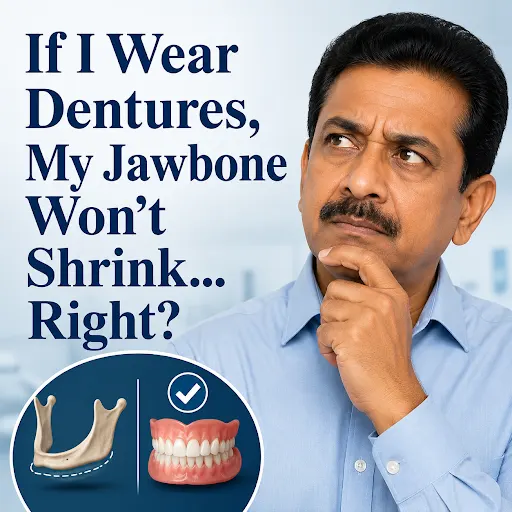
No, traditional dentures do not stop your jawbone from shrinking. Many people believe that removable dentures protect facial structure, but this is a major medical misconception. In fact, traditional options can actually accelerate bone loss over time.
Why Traditional Dentures Fail to Stop Bone Loss
- Surface placement: Traditional dentures rest only on the soft gum tissues.
- No root replacement: They replace visible tooth crowns but completely ignore missing roots beneath the surface.
- Zero internal stimulation: Without a root anchor inside the jawbone, your skeletal structure receives no biological signal to maintain its volume.
How Traditional Dentures Accelerate Bone Loss
- Friction and movement: Loose dentures constantly shift, rub, and apply uneven pressure.
- Cell activation: This friction triggers bone-crushing cells that accelerate natural bone resorption.
- The structural cycle: As the bone dissolves, the device loses its original snug fit.
- Resulting damage: The denture slips, clicks, and causes painful sores, requiring frequent clinic adjustments.
How Do Dental Implants Protect Your Face Shape?
Implant dentistry protects your face shape by permanently replacing missing tooth roots to halt jawbone shrinkage and restore your maxillofacial structure.
This advanced procedure serves as the absolute gold standard for modern restorative dentistry, especially when treating a sunken mouth appearance following tooth loss.
- Biocompatible Titanium Post: During dental implant surgery, a small, medical-grade titanium screw is placed directly into the jawbone. Your body accepts this material completely, treating it exactly like a natural tooth root.
- The Osseointegration Process: Over a few months, your living bone cells grow tightly around the post. This vital healing phase permanently fuses the implant into your jaw structure, creating a stable foundation for fixed dental prosthetics.
- Bone Grafting for Implants: If tooth loss occurred years ago and the ridge is too thin, a dentist can perform a minor bone graft to rebuild the area before placing the implant.
4 Steps to Jawbone Preservation
| Step | Biological Action | Visible Facial Benefit |
| 1. Implant Surgery | A titanium post replaces the missing root. | Establishes a solid foundational anchor. |
| 2. Osseointegration | Surrounding bone fuses with the implant surface. | Locks the post securely inside the jaw. |
| 3. Mechanical Stimulation | Chewing forces are transmitted deep into the jawbone. | Signals the body to keep sending vital minerals. |
| 4. Long-Term Preservation | Bone density is maintained, stopping resorption. | Prevents facial collapse and keeps cheeks full. |
Why This Stops Facial Collapse For Life
- Restores Chewing Pressure: Once bone fusion is complete, biting and chewing forces are transmitted through the implant to stimulate the surrounding bone tissue.
- Preventing Bone Loss After Extraction: This constant mechanical stimulation keeps blood flowing to the area, completely stopping jawbone deterioration.
- Full Arch Solutions: For patients missing multiple teeth, advanced techniques like All-on-4 dental implants can secure a full set of teeth on just four posts, protecting the entire lower face profile at once.
- Maintains Youthful Contours: By preserving your underlying bone density, implants keep your cheeks from sinking and permanently protect your natural facial framework.
Ready to Protect Your Smile? Here’s Your Final Takeaway
Leaving a missing tooth untreated causes an invisible, progressive loss of your jawbone that permanently alters your facial profile. While old-fashioned tooth replacements only hide the gaps on the surface, they cannot stop bone loss beneath.
Choosing advanced dental implants safely stops this bone breakdown, protects your natural facial features, and fully restores your long-term oral health.
Schedule a Consultation Today

At Magic Smile Dental Clinic in Kolkata, our highly experienced medical team uses advanced 3D digital imaging to check your bone density and plan safe, long-lasting implant treatments. We can help you reverse the signs of bone loss with a range of dental implants at our three modern, easy-to-reach facilities.
Call now, and book a dental evaluation today.
People Also Ask
How long after losing a tooth can you get dental implants?
The ideal time to get a dental implant is within 3 to 6 months after an extraction. This window ensures the gums heal before rapid alveolar ridge resorption sets in.
Can a missing back tooth change your face shape?
Yes, losing a single back molar triggers jawbone atrophy that collapses your bite alignment. This shifting forces your chin forward and upward, creating a shorter, prematurely aged facial profile.
Is there an age limit for getting dental implants to fix facial collapse?
There is no upper age limit for implants, but younger patients must wait until jaw growth stops. This skeletal maturity occurs around age 18 for women and age 21 for men.
What is a sinus lift, and why is it needed for upper jaw dental implants?
A sinus lift is a bone graft that thickens a thinned-out upper jaw near your molars. It elevates the dropped sinus floor, creating a secure anchor for dental implants.
Can missing teeth cause chronic headaches or ear pain?
Yes, missing teeth alter your chewing dynamics, causing severe bite misalignment and muscle strain. This structural imbalance inflames your temporomandibular joint (TMJ), radiating chronic pain to your head and ears.
How do you know if you have facial collapse from missing teeth?
Signs include sunken cheeks, thin lips, and deep wrinkles around your mouth. This happens when jawbone atrophy shrinks your facial skeleton, causing the overlying skin and muscles to sag.