
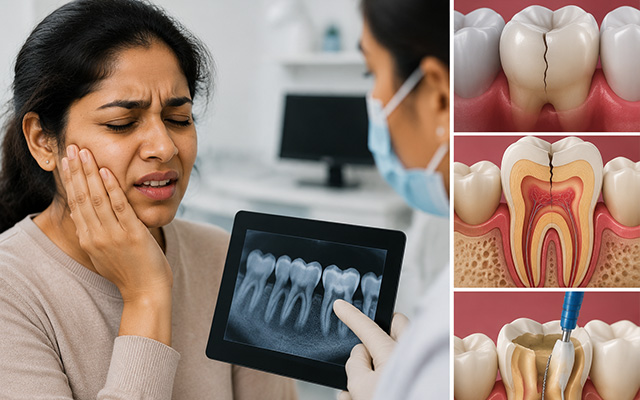
No, a cracked tooth cannot heal itself because tooth enamel cannot regenerate. Even a tiny micro-fracture can worsen over time, allowing bacteria to reach the inner tooth and increasing the risk of infection, pain, or more complex treatment. Many cracked teeth cause little or no discomfort at first, making them easy to ignore.
This guide explains how micro-fractures develop, the warning signs to watch for, when treatment is needed, and how early care can help preserve your natural tooth and prevent a dental emergency.
What Is a Micro-Fracture in a Tooth?
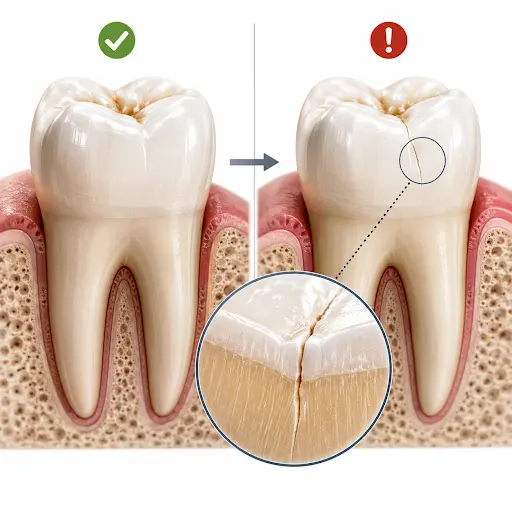
A micro-fracture is a very small crack that affects the outer structure of a tooth. Although it may not always be visible or painful, repeated pressure from chewing can gradually enlarge the crack, increasing the risk of structural damage and bacterial infection if left untreated.
A hairline crack in tooth structure is often too small to notice without a dental examination. These microscopic fractures commonly develop after repeated stress rather than a single injury.
Initially, they may affect only the enamel, but continued pressure can allow the crack to extend deeper into the dentine, making the tooth weaker and more vulnerable to damage.
How Are Micro-Fractures Different from Visible Cracks?
Micro-fractures are much smaller than visible tooth cracks and usually cannot be seen without magnification or specialised dental assessment.
Unlike superficial craze lines, which generally affect only the enamel and are mainly cosmetic, micro-fractures may progress deeper into the tooth over time. As they extend, they can compromise the tooth's strength and, if not managed promptly, eventually affect the dental pulp.
Can a Cracked Tooth Heal Itself?
No. A cracked tooth cannot heal itself. Unlike bones, tooth enamel contains no living cells or blood vessels, meaning it cannot regenerate or fuse back together.
Without treatment, a cracked tooth usually gets worse over time. Early diagnosis helps preserve the tooth and reduces the risk of infection or tooth loss.
Why Enamel Can’t Regenerate Like Skin or Bone
Enamel is the hardest substance in the human body, but it is also non-living tissue. After a tooth erupts, the cells responsible for forming enamel are no longer present. As a result, damaged enamel cannot regenerate or naturally seal a crack.
Dental treatment focuses on protecting the weakened tooth and restoring its function rather than repairing the enamel itself.
What Actually Happens Inside a Cracked Tooth Over Time?
As a crack extends beyond the enamel into the dentine, it creates pathways that allow bacteria and irritants to move closer to the dental pulp. Repeated chewing also causes the fractured surfaces to flex, placing additional stress on the tooth.
This is why the answer to "does a cracked tooth get worse over time" is usually yes, as the damage can gradually deepen if left untreated.
If the pulp becomes inflamed or infected, symptoms such as persistent pain, sensitivity, or swelling may develop, increasing the need for more extensive treatment.
What Causes Micro-Fractures in Teeth?
Micro-fractures or teeth breaking into small pieces are usually caused by tooth decay, teeth grinding, or weak enamel from acid.
Common causes include:
- Teeth grinding or clenching during sleep
- Chewing hard foods such as ice, hard sweets, or unpopped popcorn kernels
- Sudden trauma from falls, sports injuries, or accidents
- Large fillings that reduce the amount of healthy tooth structure
- Age-related wear that makes teeth more susceptible to cracking
Some patients may also develop cracked tooth syndrome, where an incomplete crack causes pain when biting or releasing pressure, even though the fracture may not be immediately visible during routine examination.
How Do You Know If You Have a Cracked Tooth? (Signs & Symptoms)
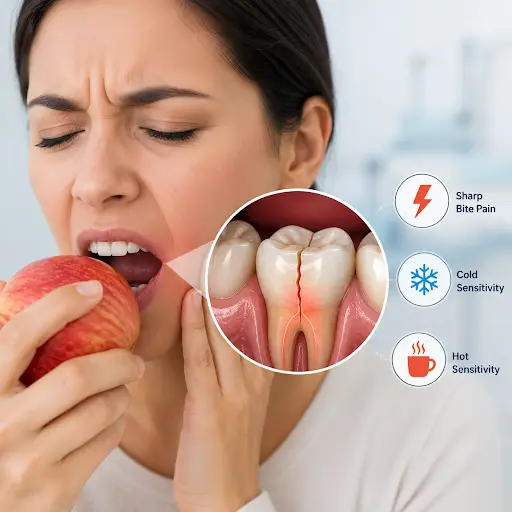
You can tell if a tooth is cracked by watching for sharp pain when chewing, sudden hot or cold sensitivity, and a toothache that comes and goes.
| Symptoms (What You Feel) | Signs (What You / Dentist Can Observe) |
| Biting discomfort: Sharp pain when biting down, especially when releasing pressure. | Gum swelling: A small, tender bump or localized swelling near the affected tooth. |
| Intermittent toothache: Pain that comes and goes, often triggered by eating or drinking. | Visible crack lines: Fine craze lines or visible fractures on the tooth surface. |
| Temperature sensitivity: Sudden pain when consuming hot, cold, or sweet foods. | Rough tooth surface: A chipped or rough edge that can be felt with the tongue or detected during examination. |
Why “No Pain” Doesn’t Mean “No Problem”
A cracked tooth may not hurt in its early stages, but that doesn't mean it isn't getting worse. As the crack deepens with repeated chewing, it can weaken the tooth and eventually reach the dental pulp, making timely treatment important.
How Do Micro-Fractures Lead to an Emergency Root Canal?
A small crack does not always require root canal treatment, but if it deepens, bacteria can reach the dental pulp and cause irreversible inflammation or infection.
The Stages - From Craze Line to Infection
At this stage, a cracked tooth root canal becomes necessary to remove the infected pulp, relieve pain, and preserve the natural tooth whenever possible.
The progression usually follows these stages:
- Superficial craze lines affect only the enamel and are generally harmless.
- A deeper micro-fracture extends into the dentine, making the tooth weaker.
- Repeated chewing causes the crack to widen further.
- Bacteria enter through the fracture and irritate the pulp.
- Persistent inflammation develops and may progress to infection.
- An untreated _cracked tooth root canal_ case can eventually lead to an abscess or severe pain, requiring urgent dental care.
This gradual progression explains why cracked tooth syndrome should never be ignored, even when symptoms are intermittent.
What Are the Treatment Options for a Cracked Tooth?
Possible treatment options include:
- Dental bonding for very small, superficial cracks.
- Tooth filling where suitable for minor structural damage.
- Crowns and bridges to protect teeth with larger cracks and restore strength.
- Cracked tooth root canal treatment if the pulp has become inflamed or infected.
- Extraction only when the crack extends so deeply that the tooth cannot be restored.
The goal is always to preserve the natural tooth whenever it is clinically possible.
How Can You Prevent a Micro-Fracture from Getting Worse?
You can reduce the risk of crack progression by:
- Wearing a custom nightguard if you grind or clench your teeth.
- Avoiding hard foods such as ice, hard sweets, and unpopped popcorn kernels.
- Not using your teeth to open packages or bite non-food objects.
- Treating teeth weakened by decay or large restorations promptly.
The bottom line: A micro-fracture will not heal on its own and may gradually worsen with time due to everyday biting and chewing forces.
Timely diagnosis and treatment can stop the crack from progressing, reduce the risk of infection, and help prevent cracked tooth syndrome, improving the chances of preserving your natural tooth.
When Should You See a Dentist About a Cracked Tooth?
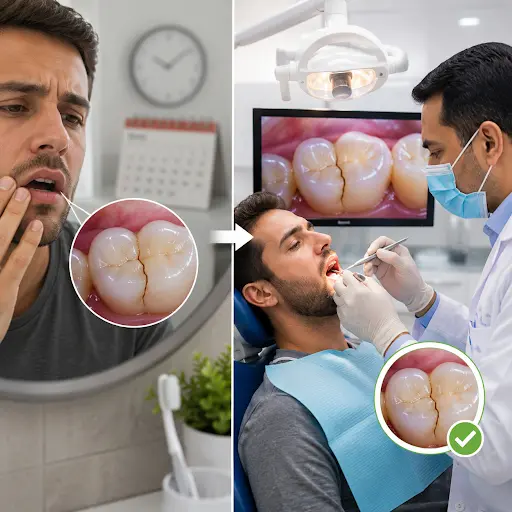
Seek emergency dental care if you experience:
- Sharp pain when biting or releasing pressure
- Ongoing sensitivity to hot or cold foods
- A chipped or visibly cracked tooth
- Swelling around the affected tooth
- Pain that wakes you from sleep
- A broken tooth following trauma
People Also Ask
Can a cracked tooth heal itself on its own without treatment?
No. Tooth enamel cannot regenerate, so a cracked tooth cannot repair itself. Early treatment helps prevent the crack from becoming larger or infected.
Is a cracked tooth an emergency?
Not every cracked tooth is an emergency, but severe pain, swelling, trauma, or signs of infection require immediate dental assessment.
Can you live with a cracked tooth?
Some people have minor cracks with few symptoms, but leaving them untreated increases the risk of the fracture worsening and damaging the dental pulp.
How long can a cracked tooth go untreated?
There is no predictable timeline. Some cracks remain stable for a period, while others progress quickly depending on their location, depth, and the forces placed on the tooth.
Will a cracked tooth always need a root canal?
No. Only cracks that damage or infect the dental pulp typically require root canal treatment. Smaller fractures may be managed with more conservative restorative procedures.
Can a dentist see a micro-fracture on an X-ray?
Not always. Many micro-fractures are too fine to appear on standard dental X-rays. Dentists often diagnose them through a clinical examination, bite tests, magnification, and other diagnostic techniques.
What happens if a cracked tooth is left untreated?
The crack may deepen over time, allowing bacteria to reach the pulp. This can lead to infection, persistent pain, an abscess, or tooth loss if treatment is delayed.
Can stress or grinding cause tooth cracks?
Yes. Habitual clenching and teeth grinding place repeated pressure on the teeth and are recognised causes of microscopic fractures and larger cracks.
Is it normal for a cracked tooth to not hurt?
Yes. A crack may produce no symptoms initially, particularly if it has not reached the dentine or pulp. This is why regular dental examinations are important, even in the absence of pain.
Final Takeaway:
A cracked tooth cannot heal itself because it is a progressive problem, not a self-healing one. If you suspect a cracked tooth, contact an emergency dentist today.
Get personalised root canal treatment at Magic Smile Dental Clinic, Newtown.
Book a consultation with our dentists today.