
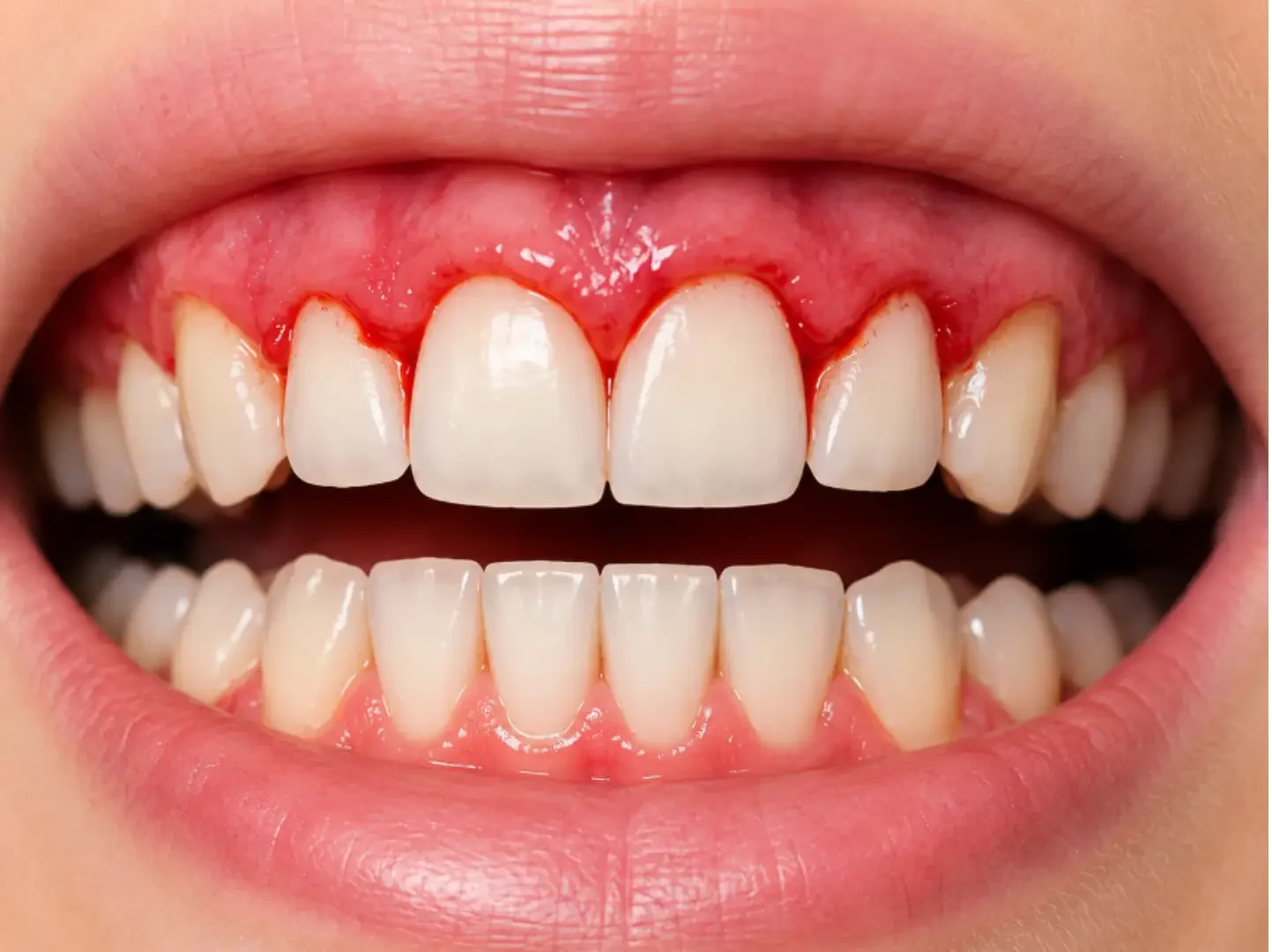
You brush, you see blood, and keep going. Most people think this is normal. It's not. Understanding the causes of bleeding matters because it is usually the first sign of gum disease.
You can stop it at every stage—from early gum swelling to infection, bone damage, and tooth loss—if you catch it early.
If you ignore it now, that chance to prevent it disappears quickly. The sooner you act, the better your outcome.
Why Do Your Gums Bleed in the First Place?
Gums bleed because plaque buildup can trigger gum inflammation and lead to gingivitis. [Source]
Common Causes Include
- Plaque buildup: Bacterial colonies collect around the gumline and trigger inflammation. This happens to everyone.
- Tartar formation: When plaque isn't removed regularly, it hardens into calcified deposits that resist routine brushing. This calcified substance clings tightly to teeth.
- Continued irritation: These deposits trap additional bacteria and worsen inflammation beneath the surface.
- Gradual progression: Early signs may appear as minor spotting during flossing. Repeated accumulation leads to heavier, frequent discharge over time.
- Deeper damage: Without treatment, the infection spreads to surrounding tissues, where serious problems can develop. Once this happens, intervention becomes more complicated and costly.
Is Bleeding Gums Always a Sign of Gum Disease?
Not always. [Source]. Plaque buildup and gingivitis are common causes, but other factors can also trigger bleeding.
Non-Dental Causes of Bleeding Gums
- Brushing too hard: Aggressive brushing can injure soft tissue.
- New flossing routine: Brief bleeding may occur after a long break.
- Hormonal changes: Pregnancy, puberty, and menopause can increase sensitivity.
- Medications: Blood thinners can increase bleeding.
- Vitamin deficiencies: Low vitamin C or K may affect tissue health.
- Medical conditions: Diabetes and clotting disorders may contribute.
What To Remember: Regardless of cause, persistent spotting requires assessment. Don't assume it's harmless. Some conditions are temporary and reversible with simple adjustments. Others need professional intervention.
Schedule a dental visit if discharge continues for more than two weeks, happens regularly, or worsens over time.
What Happens If You Keep Ignoring It? (Gingivitis to Periodontitis)
Ignoring persistent spotting sets off a predictable progression. Early detection matters because one stage is reversible; the next one isn't.
Stage 1 — Gingivitis
Your gums become red, puffy, and bleed when you brush or floss. The infection stays at the surface—above the gumline. This stage is entirely reversible. Improved oral hygiene, professional cleaning, and consistent home care can eliminate inflammation and restore health. Caught here, you recover completely.
Stage 2 — Periodontitis
When gingivitis progresses untreated, infection spreads below the gumline. Pockets form between teeth and soft tissue—tiny spaces where bacteria and debris accumulate. Your jawbone and supporting structures begin breaking down. This stage is not reversible.
Once damage occurs, it can't be undone. Professional treatment can stop further deterioration and manage the condition, but you'll never fully restore what was lost.
In more advanced cases, gum treatment may include laser dentistry to manage affected gum tissue and bacterial buildup.
Here’s a Quick View
| Feature | Gingivitis | Periodontitis |
| Location | At the surface, above the gumline | Below the gumline, deeper tissues |
| Reversibility | Completely reversible | Permanent; not reversible |
| Bone loss | None | Active bone destruction |
| Treatment outcome | Full recovery possible | Halts progression only |
Simply put: Catch it early, and you fix it. Wait too long, and you're managing permanent damage for life.
Can Untreated Gum Disease Affect More Than Just Your Mouth?

Yes. Harmful bacteria and inflammation may enter the bloodstream, potentially contributing to health problems beyond the mouth.
Cardiovascular Link
- Artery changes: Bacteria may contribute to plaque buildup and arterial hardening.
- Higher risk: Research links severe cases with greater heart attack and stroke risk.
- Inflammation: Persistent inflammation may affect cardiovascular health.
Diabetes Link
- Two-way relationship: Diabetes and periodontal inflammation can worsen each other. [Source]
- Blood sugar: Inflammation may increase insulin resistance and complicate glucose control.
- Higher vulnerability: Elevated blood sugar can weaken the body's resistance to infection and worsen periodontal problems.
Why This Matters
- Oral health can influence health beyond the mouth.
- Managing inflammation may support overall well-being.
- Brushing, flossing, and regular dental visits help keep teeth and gums healthy.
What Are the Warning Signs You Shouldn’t Ignore?
Your mouth is sending you messages. Catch these early—they rarely improve on their own:
- Bleeding during brushing or flossing: That's inflammation, not normal wear. It signals disease is progressing beneath the surface.
- Persistent bad breath: Chronic halitosis that brushing won't fix points to bacterial buildup the toothbrush can't reach.
- Gum swelling or tenderness: Puffy, sore tissue means active infection or disease. It won't settle without intervention.
- Receding gumline: When tissue pulls back from teeth and exposes roots, you're looking at structural damage that only gets worse.
- Loose or shifting teeth: Movement means underlying bone loss—a serious sign that your support system is failing.
- Pain while chewing: Discomfort isn't something to work around. It indicates decay, damage, or disease affecting tooth stability.
The pattern? Multiple warning signs together accelerate the timeline. Schedule a professional evaluation if you're noticing even two of these. Early action stops progression.
Can Bleeding Gums Be Reversed If Caught Early?
Yes. Gingivitis responds fully to early intervention.
If you catch inflammation at this stage, it's completely reversible—bone hasn't been permanently damaged yet.
Here's what works:
- Step up your technique: Use a soft-bristled brush, gentle circular motions, and floss daily. You're removing the bacterial plaque causing inflammation.
- Professional cleaning: A hygienist reaches buildup that home care can't touch.
- Timeline: Most people see bleeding stop within 1–2 weeks of improved habits and professional care.
Note: Persistent gum recession or changes in gum appearance may require cosmetic dentistry treatment options to improve the affected areas.
What Happens During Treatment for Gum Disease?
Treatment is straightforward and builds in stages based on what your dentist finds.
- Scaling (Initial phase)
The expert performs professional tooth cleaning to remove plaque and tartar that have accumulated around your teeth and gumline. This stops the infection cycle and is often the only intervention early cases need.
- Root planing (For more advanced disease)
The specialist performs a deeper cleaning that reaches affected areas below the gumline. Smoothing root surfaces prevents bacteria from reestablishing and lets gums reattach to teeth.
- Maintenance visits
After treatment, you'll return every 3–4 months instead of the standard 6. Regular check-ups catch issues early and help prevent recurrence.
- Daily care improvements
Your dentist may refine your brushing or flossing technique—small adjustments often make a big difference in what you can remove at home.
How Can You Stop Bleeding Gums at Home Before It Gets Worse?
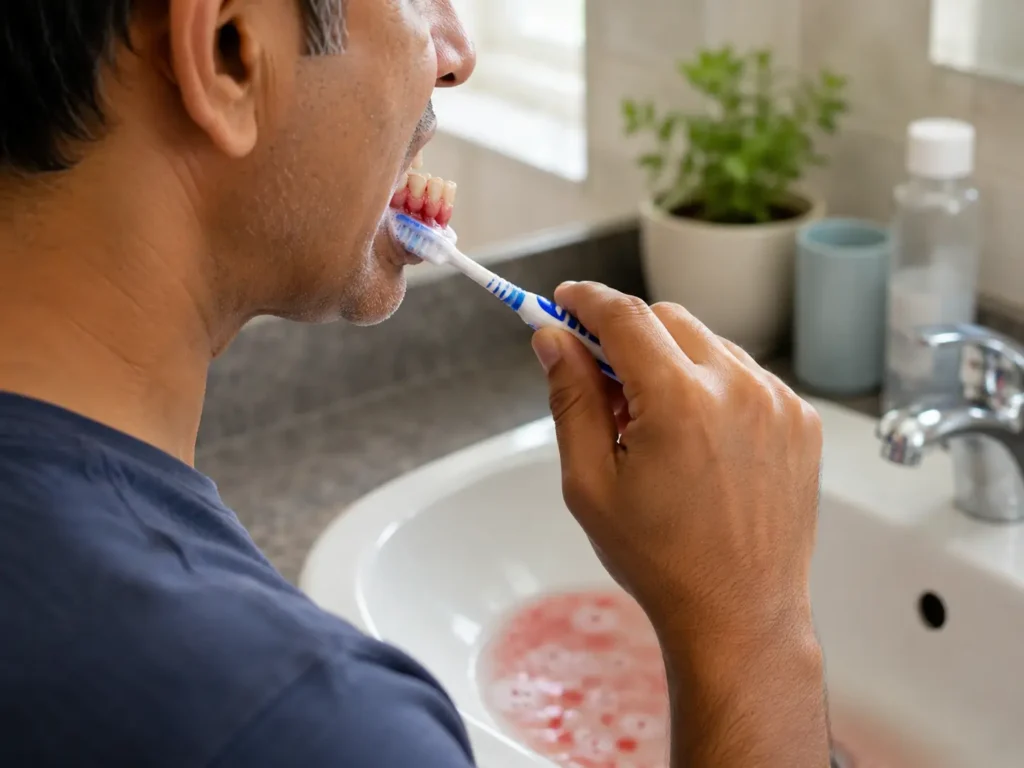
You can by improving daily oral hygiene and soothing inflamed gum tissue.
Immediate Home Care Steps
- Proper brushing technique: Use a soft-bristled brush in gentle circular motions, angling bristles toward the gumline. Aggressive scrubbing damages tissue. Brush twice daily for two minutes.
- Floss every day: Most bleeding happens where your toothbrush can't reach. Daily flossing removes plaque between teeth before it hardens into tartar.
- Antibacterial mouthwash: Rinsing reduces bacteria, especially after meals. Look for products targeting gum health—they complement mechanical cleaning.
- Avoid tobacco: Smoking and chewing accelerate disease and compromise healing. It's one of the fastest ways to worsen progression.
When Should You See a Dentist for Bleeding Gums?
If bleeding persists beyond a week of improved home care, see a specialist.
Schedule immediately if you notice:
- Bleeding continues after 7–10 days of proper brushing and flossing
- Swelling, tenderness, or persistent bad breath alongside bleeding
- Gums pulling away from teeth or teeth feeling loose
- Pain while chewing
- Multiple warning signs appearing together
Key Takeaways: Don’t Ignore What Your Gums Are Telling You
Bleeding gums aren't a normal part of ageing or brushing. Understanding common causes—plaque, tartar, and bacterial infection—shows why early intervention matters. They're your body's alarm system.
- Inflammation caught early is completely reversible
- Professional cleaning removes what home care can't reach
- Daily habits support treatment but don't replace it
- Multiple warning signs together accelerate deterioration
- Delaying care turns a reversible problem into permanent bone loss
If you're seeing blood in your gums, contact Magic Smile Dental Clinic in Newtown this week. Early intervention stops progression. Ignoring it costs you teeth.
People Also Ask
Is it normal for gums to bleed a little every time you brush?
No. Frequent bleeding usually indicates inflammation and warrants attention, especially when it continues despite gentle brushing and regular cleaning.
Can stress cause bleeding gums?
Stress can affect oral health by weakening immune responses and changing habits, which can increase inflammation and make bleeding more likely.
Do bleeding gums mean you’re losing teeth?
Not necessarily. However, persistent bleeding can signal advancing periodontal disease, which may eventually damage supporting bone and loosen teeth.
Can pregnancy cause bleeding gums?
Yes. Hormonal changes during pregnancy can increase gum sensitivity, making tissues more prone to swelling, irritation, and bleeding.
How long does it take for gingivitis to turn into periodontitis?
There is no fixed timeline. Progression varies with oral hygiene, bacterial buildup, smoking, systemic conditions, and individual susceptibility.
Can mouthwash alone fix bleeding gums?
No. Mouthwash can reduce bacteria but cannot remove hardened deposits. Effective care may require professional cleaning, along with daily brushing and flossing.
Are bleeding gums linked to vitamin deficiencies?
Yes. Low vitamin C or K levels can affect gum health and blood clotting, although other causes are more common.
Can bleeding gums come back after treatment?
Yes. Recurrence can happen when plaque builds up again or daily care declines. Regular maintenance and consistent oral hygiene help prevent it.