
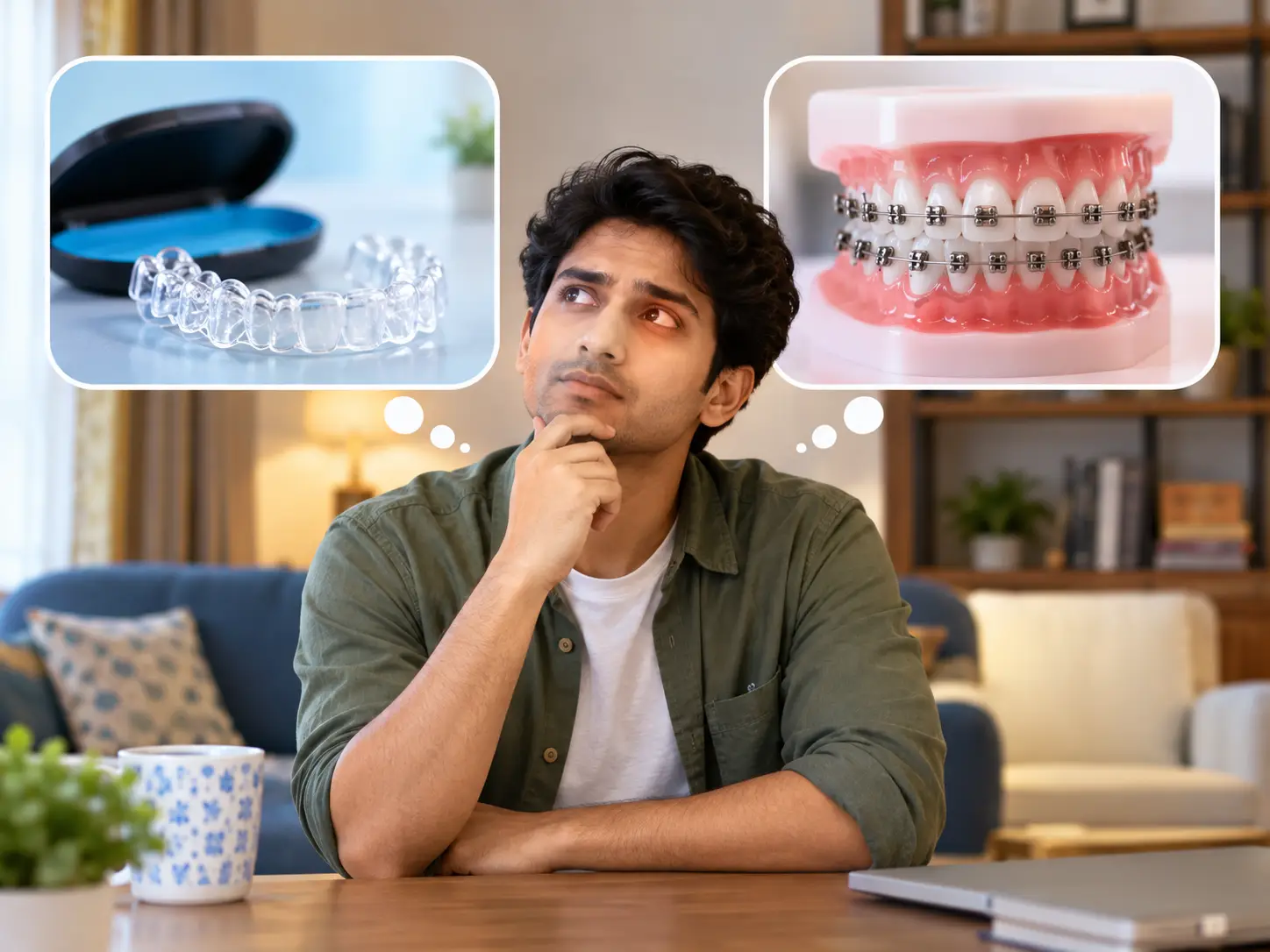
Both treatment options can straighten teeth and improve bite alignment, but they work differently and suit different needs. The choice depends on the complexity of the alignment problem, appearance preferences, daily routine, cleaning habits, treatment goals, and ability to follow instructions.
The best choice is to visit a dental clinic for a comprehensive examination to determine which option suits your teeth.
What Is the Difference Between Invisalign and Traditional Braces?
Braces work well for complex bite corrections, while Invisalign provides a discreet, removable option for mild to moderate alignment problems.
| Feature | Braces | Invisalign |
| Visibility | Metal is highly visible; ceramic is subtler | Nearly invisible clear plastic |
| Removability | Fixed to teeth 24/7 | Removable; worn 20–22 hours daily |
| Dietary Rules | Avoid hard, sticky, or crunchy foods | No food restrictions; remove while eating |
| Cleaning | Brushing and flossing around brackets can be challenging | Remove for easier brushing and flossing |
| Office Visits | Every 4–6 weeks | Every 6–8 weeks |
Neither option is universally better. The right choice depends on the patient's teeth, bite, and treatment needs.
How Do Invisalign and Braces Actually Work?
Both systems use controlled force to remodel the surrounding jawbone and gradually move teeth into alignment. Braces use fixed brackets and wires, while Invisalign uses removable aligners that apply targeted pressure.
How Do Traditional Metal Braces Straighten Teeth?
- Brackets and Wires: Brackets and archwires apply continuous pressure to move teeth into position.
- Bone Remodelling: Pressure stimulates bone changes around the tooth, allowing gradual movement.
- Adjustments: Wire adjustments and elastics help guide teeth into planned positions.
How Do Invisalign Clear Aligners Straighten Teeth?
- Sequential Pressure: Each tray applies targeted force before the next replaces it.
- Attachments: Tooth-coloured attachments provide additional grip for specific movements.
- Digital Planning: Treatment mapping controls tooth movement at each stage.
For a broader understanding of when correction may be needed, see signs that indicate you may need orthodontic treatment.
Which Looks Better — Invisalign or Braces?
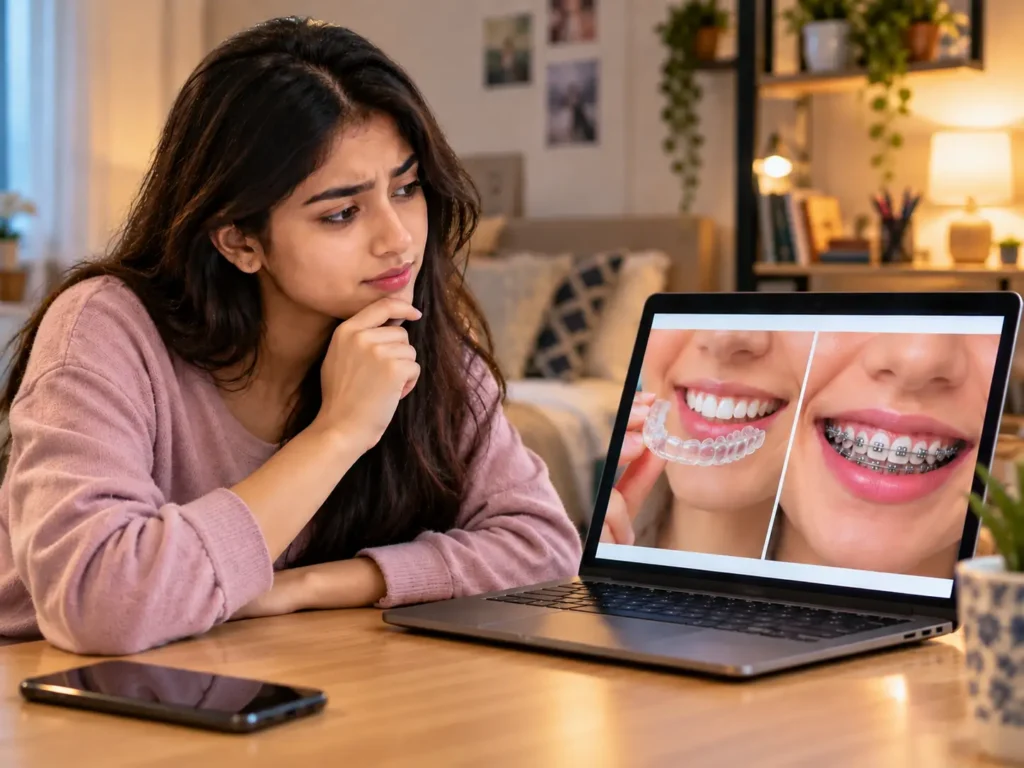
Invisalign is less noticeable because its clear plastic trays are designed to blend with your teeth and are hard to notice in everyday conversation.
Quick View
| Feature | Invisalign | Traditional Braces |
| Visibility | Virtually invisible clear plastic trays | Highly noticeable metal brackets and wires |
| Material | Clear, smooth medical-grade plastic | Silver stainless steel or dark titanium |
| Attachments | Small, tooth-coloured bumps may be bonded to teeth | Standard brackets bonded to the front of teeth |
| Customisation | Clear only; completely transparent | Coloured elastic bands can be customised |
| Smile Impact | Blends naturally with your existing teeth | More noticeable during treatment |
Orthodontic correction can also be part of a complete smile makeover when alignment issues affect the overall appearance of the smile.
Which Is More Comfortable, Invisalign or Braces?
Invisalign is generally more physically comfortable. [Source].
A Simple Comparison
| Feature | Invisalign | Traditional Braces |
| Mouth Irritation | Smooth plastic; less likely to irritate cheeks and soft tissues | Metal brackets and wires may scrape or irritate soft tissues |
| Pressure Pain | Mild, gradual pressure when changing trays | Soreness or discomfort may occur after adjustments |
| Eating Comfort | Removable trays allow normal eating | Fixed hardware requires avoiding hard or sticky foods |
| Daily Hygiene | Easy to brush and floss without hardware obstacles | More difficult to clean around brackets and wires |
Invisalign vs Braces: Which Costs More?
Invisalign often costs more in comparison.
Here’s Why?
- Advanced Technology: Treatment uses precise 3D digital scans and customised treatment planning to produce sequential aligners for each stage of tooth movement.
- Lab Fees: Custom aligner fabrication and laboratory processing add costs beyond those associated with standard brackets and archwires.
Depending on your alignment needs, the clinic may also consider other common orthodontic treatment options.
Which Treatment Works Faster — Invisalign or Braces?
Invisalign can work faster for mild to moderate alignment issues.
Treatment Time Comparison
- Invisalign: Treatment may take 6–12 months for mild spacing or crowding and around 12–18 months for moderate cases.
- Traditional Braces: Treatment typically takes 18–24 months, with very complex realignment sometimes requiring up to 36 months
Can Invisalign Fix the Same Problems as Braces?
Yes, it can correct many alignment and bite problems. However, braces may be more suitable for severe or complex orthodontic cases.
What Invisalign Can Fix
- Mild-to-moderate gaps and crowding.
- Selected overbites, underbites, crossbites, and open bites.
- Crooked or mildly rotated teeth for a more even smile.
Where Braces Still Have the Advantage
- For severe rotations, major bite corrections, and jaw issues.
- Controls extrusion, extraction spaces, and root torque.
- Works continuously; Invisalign requires 20–22 hours of daily wear.
Which Is Easier to Maintain — Invisalign or Braces?
Invisalign is generally easier for eating and oral hygiene, but it requires consistent daily wear and greater discipline than traditional braces.
- Oral hygiene: Removable aligners make brushing and flossing easier than cleaning around brackets and wires.
- Eating: Aligners come off during meals, while braces require care around foods that can get trapped.
- Compliance: Invisalign depends on wearing aligners consistently, making patient discipline essential for treatment progress.
Is Invisalign or Braces Better for Adults?
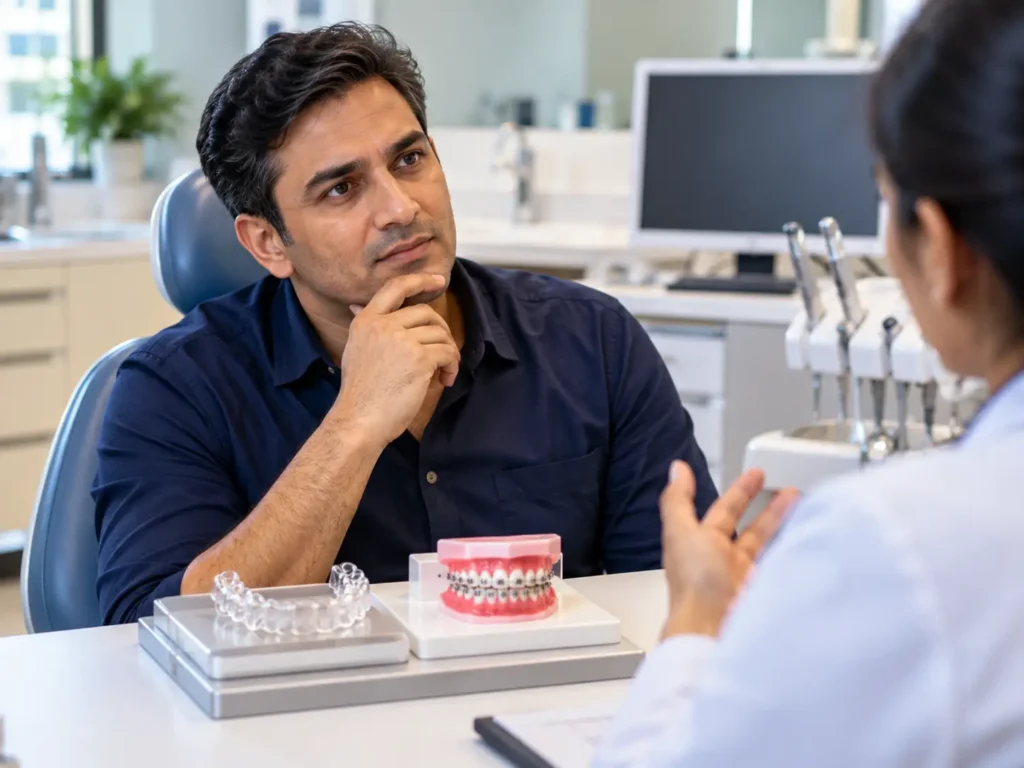
Neither is universally better for adults. The choice depends on the orthodontic problem, lifestyle and treatment requirements.
Clear aligners may appeal to adults who prioritise discretion and want an appliance they can remove to eat and for oral hygiene. Braces may be considered when more complex or precise tooth movements are required.
Adults should also consider:
- Work and social commitments
- Ability to wear aligners consistently
- Cleaning preferences
- Dietary habits
- The complexity of the required correction
The best option achieves the required tooth and bite correction while fitting realistically into the patient's daily routine.
How Do You Decide Which One Is Right for You?
The choice depends on your dental complexity, lifestyle preferences, and compliance.
- Invisalign uses clear, removable aligners that offer a discreet appearance and easy cleaning, making them ideal for mild-to-moderate alignment issues.
- Traditional braces use fixed brackets and wires, providing the continuous power necessary to correct severe crowding or complex bite problems.
Visit a dental clinic for a personalised session to determine the most effective treatment plan for your specific smile goals.
Knowing what to expect before and after orthodontic treatment can help you prepare for the changes throughout the process.
Frequently Asked Questions
Is Invisalign as effective as braces for crooked teeth?
Yes, it can be effective for many cases of crooked teeth. However, effectiveness depends on the severity and type of tooth movement required.
Does Invisalign really cost less than braces?
Not necessarily. Costs vary by treatment complexity, duration, appliance type, and the clinic's fee structure.
Can adults get braces instead of Invisalign?
Yes. Adults can receive conventional braces when they are appropriate for the required correction.
How many hours a day do you need to wear Invisalign?
Wear it 20 to 22 hours a day. You generally remove them only to eat, drink anything other than water, and brush and clean.
Does Invisalign work for severe misalignment or only mild cases?
Yes, it can treat both mild and moderate problems, while some severe or complex cases may require braces or another approach.
Can you switch from braces to Invisalign mid-treatment?
Yes, you can switch mid-treatment if your teeth have made enough progress and complex bite issues are resolved.
Which one is better for teenagers — Invisalign or braces?
Neither is universally better. The choice depends on the orthodontic problem and the teenager's ability to follow the treatment requirements.
Do you need to wear a retainer after Invisalign the same as after braces?
Yes. Retention is generally needed after either treatment to help maintain the corrected tooth positions.
Is Invisalign covered by dental insurance in India?
No, because it is classified as a cosmetic or elective orthodontic treatment. Patients should check their policy for orthodontic treatment and any exclusions or limits.
How painful is the first week of Invisalign compared to braces?
It is generally less painful. On a scale of 1 to 10, the first few days are commonly rated around a 2 to 4. However, both procedures cause temporary soreness.
Don’t Delay: Get a Personalised Recommendation
No single choice suits everyone. The right option depends on your tooth alignment, bite, treatment complexity, lifestyle and ability to follow the treatment plan.
If you are considering orthodontic treatment, book a consultation with our cosmetic dentist in Newtown to discuss your teeth, bite and available treatment options.