
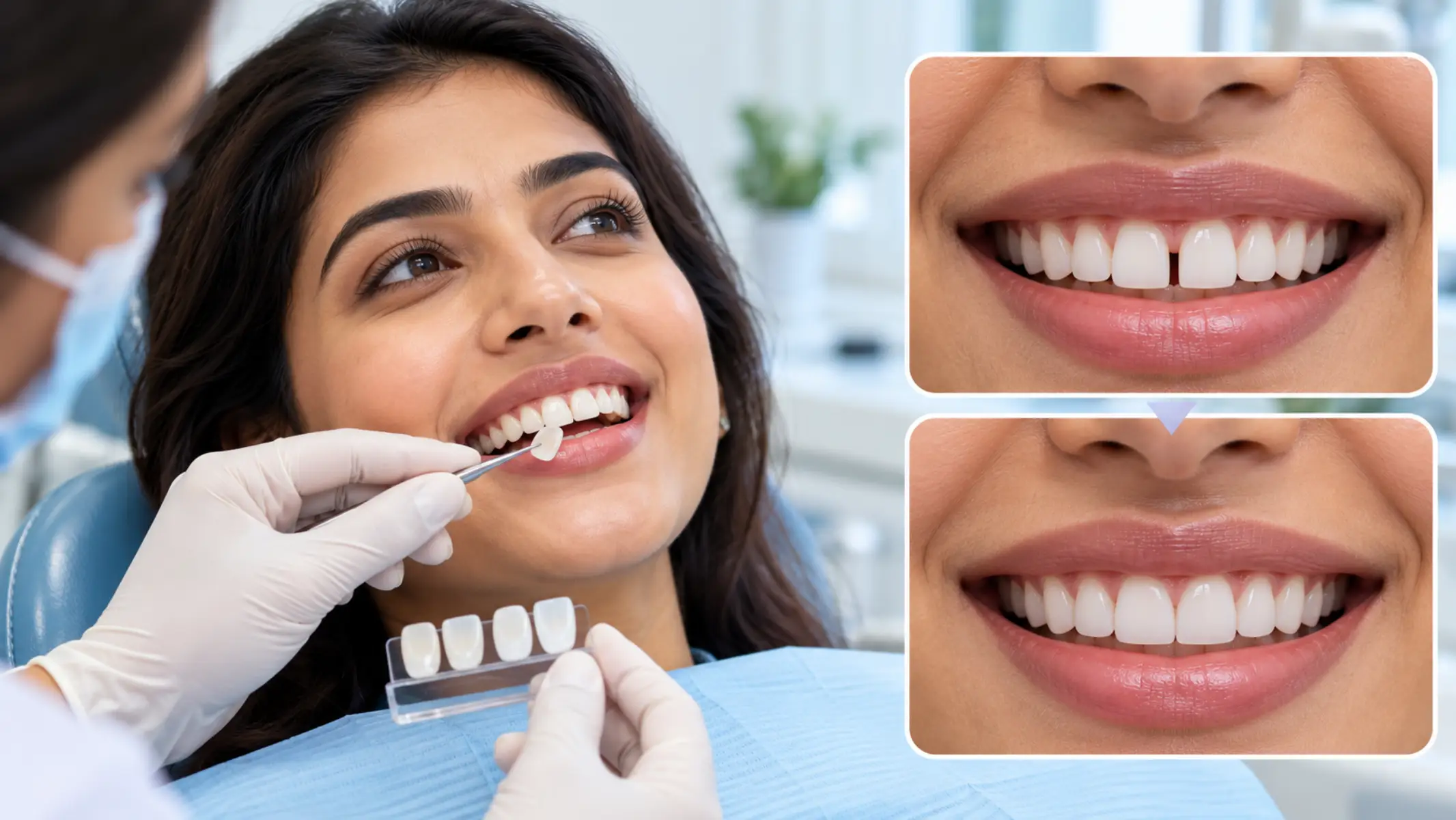
A gap between your front teeth can change how you smile. Many people want it closed, and veneers come up in almost every search for a fix.
So do they work? Yes, for small to moderate gaps in healthy teeth. Veneers close the space, reshape the tooth, and improve its colour in one treatment. They do not suit everyone, though.
This guide covers how veneers close gaps, what shapes the price, and which alternatives may fit you better.
What Causes Gaps Between Teeth?
A gap between teeth is called a diastema. It shows up most often between the two upper front teeth.
Common causes include:
- Teeth that are small for the jaw
- Family genetics
- Tongue pressing against the front teeth
- Thumb sucking in childhood
- A large frenum (the tissue linking the lip to the gum)
- Gum disease that loosens teeth
- A missing tooth
The cause shapes the treatment. Gum disease needs care first. A missing tooth needs a different fix than a natural gap. Your dentist should find the cause before recommending veneers.
Do Veneers Work for Gaps Between Teeth?
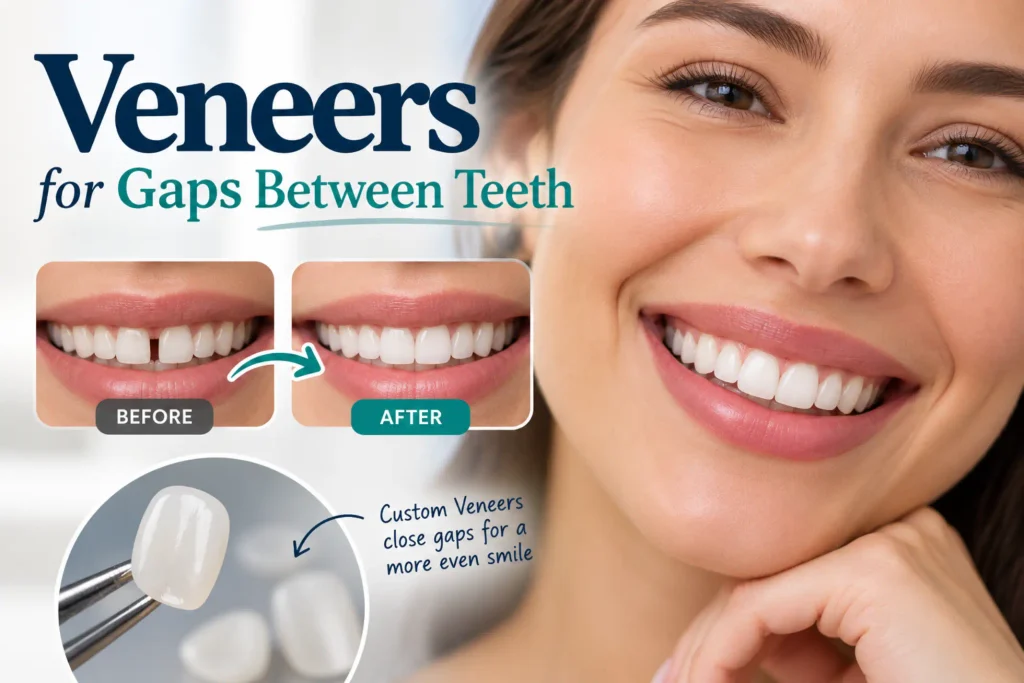
Yes. A veneer is a thin, custom-made shell bonded to the front of a tooth. Your dentist makes it slightly wider than the natural tooth. That extra width fills the space.
Veneers work best on small to moderate gaps. Very wide gaps often need orthodontic treatment first. Forcing wide veneers over a large gap can make teeth look bulky and unnatural.
Veneers also fix chips, stains, and uneven shapes at the same time. That makes them a popular part of a smile makeover.
How Does the Veneer Procedure Work?
Most patients need two to three visits.
- Consultation. Your dentist checks your teeth, gums, and bite, and discusses your goals.
- Smile planning. You agree on tooth shape, size, and shade.
- Preparation. The dentist removes a thin layer of enamel so the veneer sits flush.
- Impressions or scans. A dental lab crafts your custom veneers.
- Bonding. The dentist fits each veneer, checks your bite, and bonds it in place.
You may wear temporary veneers between visits. Learn more about our veneers treatment in Newtown.
Which Is Better for Gaps: Porcelain or Composite Veneers?
Porcelain veneers are strong, resist stains, and mimic the shine of natural teeth. The American Dental Association describes them as strong, long-lasting, and natural-looking. They sit at the higher end of the price range.
Composite veneers use tooth-coloured resin. Dentists can often place them faster, and they cost less. They stain and chip more easily and wear out sooner.
Choose based on gap size, budget, and how long you want the result to last. Your dentist can walk you through both options.
Who Is a Good Candidate for Veneers?
You may be a good candidate if you have:
- Healthy gums and no active decay
- Enough strong enamel
- A small to moderate gap
- Realistic expectations
Veneers may not suit you if you:
- Clench or grind your teeth
- Have a deep overbite
- Have untreated gum disease or cavities
- Have a gap caused by a missing tooth
The ADA advises treating decay and gum disease before placing veneers. Veneers over unhealthy teeth can worsen existing problems.
What Are the Pros and Cons of Veneers for Gaps?
Pros
- Fast results in a few visits
- Natural look
- Colour and shape corrected together
- Porcelain resists stains
Cons
- Enamel removal cannot be reversed
- Higher price than bonding
- Replacement needed over time
- Possible sensitivity after treatment
- Not suited to large gaps
How Much Do Veneers for Gaps Cost?
Prices vary, and a dentist’s written estimate is the only reliable figure. Here is what moves the price:
- Material: Composite generally sits in the budget-to-mid range per tooth. Porcelain sits in the mid-to-premium range.
- Number of teeth: Closing one gap often involves two teeth, since both sides share the space.
- Clinic expertise and lab quality: Skilled planning and quality materials raise the price.
- Extra treatment: Gum care or whitening can add to the total.
Be careful with prices that look too low. The ADA warns the public about “veneer technicians” who bypass licensed dentists. Poorly planned veneers can damage healthy teeth.
Want a clear estimate? Visit our treatment charges page or book a consultation.
What Are the Alternatives to Veneers for Gaps?
| Option | Best for | Key trade-off |
|---|---|---|
| Dental bonding | Small gaps | Chips and stains sooner |
| Braces or clear aligners | Larger gaps and bite issues | Takes months |
| Crowns | Weak or damaged teeth | Removes more tooth |
| Frenum or gum treatment | Gaps caused by tissue | Often paired with braces |
| Bridges or implants | Gaps from missing teeth | Involves surgery or tooth preparation |
Braces and aligners move teeth into place and treat the cause of the gap. Compare them in our guide to Invisalign vs traditional braces. You can also explore orthodontic treatment at our clinic.
How Long Do Veneers Last, and How Do You Care for Them?
Porcelain veneers often last a decade or more with good care. Composite veneers usually need replacing sooner.
Protect them with these habits:
- Brush with fluoride toothpaste twice a day
- Clean between your teeth daily
- Avoid biting nails, ice, or pen caps
- Wear a night guard if you grind your teeth
- Keep up regular checkups
What Should You Ask Your Dentist Before Getting Veneers?
A good consultation answers these questions:
- How wide is my gap, and can veneers close it naturally?
- Do I need braces first?
- How much enamel will you remove?
- Which material do you recommend, and why?
- Can I see before-and-after cases?
- What follow-up care do I need?
Frequently Asked Questions
Can veneers fix a gap between front teeth?
Yes. Small to moderate gaps respond best. Your dentist will check your gap size and bite first.
Is it better to get braces or veneers for gaps?
Braces move teeth and treat the cause, but they take months. Veneers work faster and also change tooth shape and colour. Your gap size and bite decide the better fit.
Are veneers permanent?
Not fully. Enamel removal is permanent, and veneers need replacing after several years.
Do veneers hurt?
Most patients feel little discomfort. Dentists use local anaesthetic during preparation. Mild sensitivity can follow for a few days.
Final Thoughts: Are Veneers the Right Choice for Your Gap?
Veneers can close small to moderate gaps quickly and give you a natural-looking smile. They work best on healthy teeth with a clear plan.
The right choice depends on your gap size, bite, and budget. A proper exam gives you the answer.
Looking for a cosmetic dentist in Newtown? Book a consultation and find out which option fits your smile.