
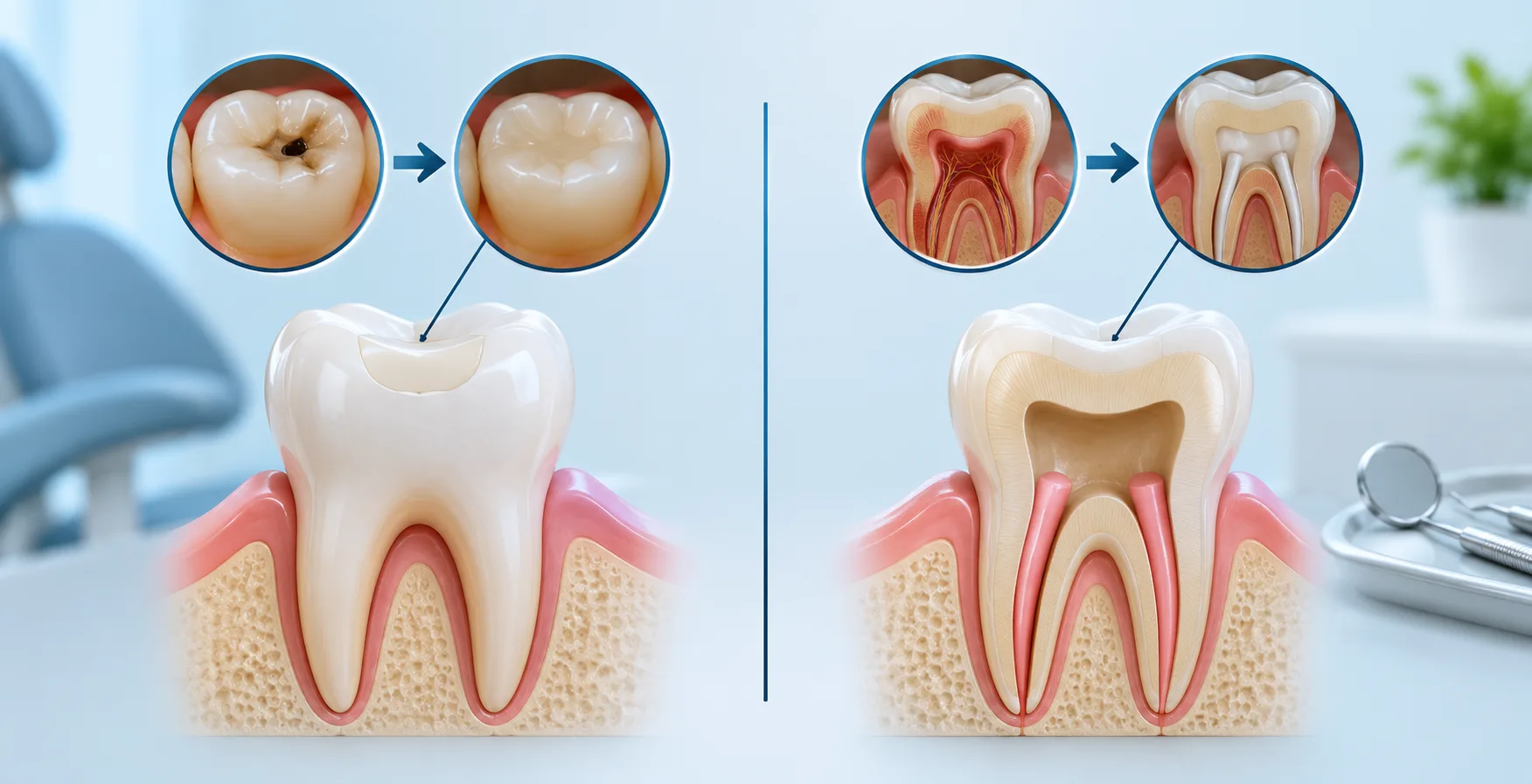
A tooth filling repairs a cavity that has damaged only the outer layers of a tooth. A root canal treatment (RCT) removes infected or inflamed pulp from inside the tooth when decay or injury has reached the nerve. Fillings are quicker, simpler, and cheaper. RCT is more involved, but it saves a tooth that might otherwise need extraction.
Tooth pain often leaves people asking: "Do I need a filling or a root canal?" Both treatments keep your natural tooth, but they solve problems at very different depths. This guide explains the basic differences in plain language.
What Is a Tooth Filling and When Is It Needed?
A tooth filling rebuilds a tooth after a dentist removes decayed material. It is used when a cavity is small to moderate and has not reached the pulp, the soft tissue that holds the tooth's nerves and blood vessels.
The dentist numbs the area, removes the decay and fills the space with a material such as tooth-coloured composite resin, glass ionomer, amalgam or gold. Most fillings are completed in a single visit.
You may need a filling if you notice:
- A visible pit, hole or dark spot on the tooth
- Brief sensitivity to sweet, hot, or cold food that fades quickly
- Mild discomfort when chewing
What Is Root Canal Treatment (RCT) and When Is It Needed?
Root canal treatment treats an infected or inflamed pulp. When bacteria reach the pulp through deep decay, a crack or an injury, the tissue cannot heal on its own, and the infection can spread to the bone around the root.
During RCT, the dentist numbs the tooth, removes the diseased pulp, cleans and disinfects the root canals, and seals them. The tooth is then restored with a filling or, very often, a crown. The American Association of Endodontists estimates that more than 15 million root canal procedures are performed each year, so it is a routine, well-established treatment.
What Are the Basic Differences Between RCT and a Tooth Filling?
| Feature | Tooth Filling | Root Canal Treatment (RCT) |
|---|---|---|
| Purpose | Repairs a cavity in the outer tooth layers | Removes infected pulp and saves the tooth |
| Depth of damage | Enamel and dentin | Reaches the pulp (nerve) |
| Typical symptoms | Mild or occasional sensitivity | Severe, lingering pain or swelling |
| Visits | Usually one | One to two, sometimes more |
| Follow-up restoration | Not needed | Often a crown, especially on back teeth |
| Cost | Lower | Higher |
In short, a filling rebuilds the tooth's surface, while RCT cleans the inside of the tooth and then rebuilds it.
How Do You Know Whether You Need a Filling or a Root Canal?
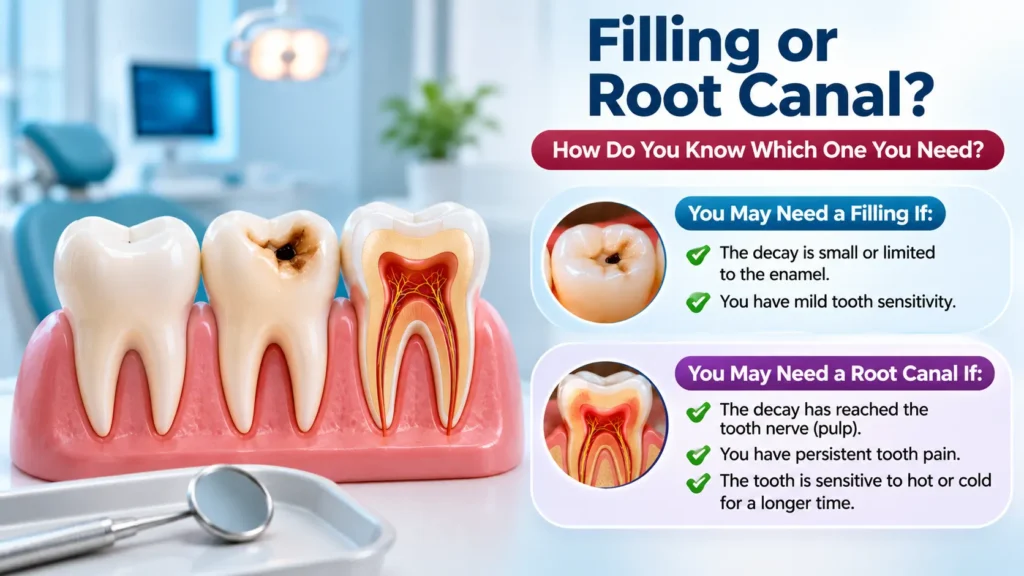
Only a dentist can tell you for sure, usually with an exam and an X-ray. Signs that point toward a root canal include:
- Severe or persistent toothache, especially when chewing or touching the tooth
- Lingering pain after hot or cold food or drinks are removed
- Darkening or discolouration of the tooth
- Swelling or tenderness in the nearby gum
- A recurring pimple-like bump on the gum, which can signal infection
A tooth can be infected without causing pain, so regular check-ups matter. Do not rely on symptoms alone, and do not self-diagnose.
Is a Root Canal More Painful Than a Filling?
Not in the way most people fear. With modern local anaesthesia, RCT should feel similar to getting a filling. The pain people associate with root canals usually comes from the infection that makes the treatment necessary, not from the procedure itself.
Mild soreness for a few days after RCT is normal and can usually be managed with medication your dentist recommends. After a simple filling, sensitivity typically settles quickly. Until a root-treated tooth has its final crown or filling, chew on the opposite side to protect it from fracture.
How Long Do Fillings and Root Canals Last?
Fillings can last many years, but they may chip, wear or leak over time and may need replacing. Good oral hygiene extends their life.
Root canal outcomes are strong. Reviews from the European Society of Endodontology estimate that roughly 80 to 93 percent of root-filled teeth survive between two and ten years, and many last far longer. Success depends heavily on a well-sealed final restoration and regular dental check-ups.
How Much Do a Filling and a Root Canal Cost in India?
Costs vary by city, clinic, tooth type and materials. Published estimates in India put basic fillings at about ₹500 to ₹3,000, while root canal treatment commonly ranges from around ₹3,000 to ₹15,000 per tooth. Molars cost more because they have more canals, and a crown adds to the total.
Ask your dentist for a written estimate covering the procedure, imaging and final restoration. Treating decay early with a filling is almost always the cheaper path.
Can You Get a Filling Instead of a Root Canal?
Only if the decay has not reached the pulp. If the pulp is infected, a filling alone cannot remove the bacteria inside the tooth, and the infection will usually return or worsen. In that case, RCT is the treatment that saves the tooth. The alternative is extraction followed by an implant, bridge or denture, which generally costs more and takes longer.
What Happens If You Delay Treatment?
A cavity that could have been fixed with a filling can grow, reach the pulp and then need RCT. An untreated pulp infection can form an abscess, spread to surrounding tissues and eventually lead to tooth loss. To lower your risk, brush twice a day with fluoride toothpaste, floss daily, limit sugary snacks and visit your dentist every six months.
Frequently Asked Questions (FAQs)
Is RCT the same as a tooth filling?
No. A filling repairs surface-level decay, while RCT removes infected pulp from inside the tooth before it is sealed and restored.
Do I always need a crown after a root canal?
Not always, but a crown is commonly recommended for back teeth because a treated tooth can be more brittle. Front teeth with plenty of healthy structure may sometimes be restored with a filling. Your dentist will advise based on the tooth.
Can a root canal be done without pain?
Yes. Local anaesthesia numbs the tooth, so most patients feel pressure rather than pain. Some soreness afterward is normal and short-lived.
Can I need a root canal if my tooth doesn’t hurt?
Yes. Infection can be present without noticeable pain, and an X-ray may reveal it. Regular check-ups help catch problems early.
Which is better, a filling or a root canal?
Neither is better in general. The right treatment depends on how deep the damage goes. A filling suits early decay, while RCT suits pulp infection. Your dentist will confirm the choice with an exam and imaging, so you get the most conservative treatment that works.
Final Thoughts
A filling and a root canal both protect your natural tooth, but they are meant for different stages of decay. The earlier you act on tooth pain, sensitivity or a visible cavity, the more likely a simple filling will be enough.
At Magic Smile Dental Clinic, our team offers root canal treatment, tooth fillings, tooth extraction, teeth whitening, dental implants and many other dental treatments under one roof. Contact Magic Smile Dental Clinic today to get your tooth checked and receive the right care.