

Root canal treatment should not hurt during the procedure when the tooth is adequately numbed with local anaesthesia. The pain people fear often comes from the infected tooth, not the treatment itself. Understanding what happens during the procedure can help ease anxiety and clarify what to expect.
This guide explains the steps involved, how long root canal treatment takes, what discomfort may occur afterwards, and when to contact your dentist.
Does a root canal hurt?
No. It feels no more uncomfortable than getting a standard dental filling. [Source].
- The numbing process: Local anaesthesia completely desensitises the tooth and surrounding area.
- Initial sensation: Patients will only feel a small pinch when the numbing injection goes in.
- During treatment: You may feel pressure, movement, or vibration, but you should not feel sharp pain.
- Mid-procedure adjustments: If anything hurts, the patient can signal, and the dentist adds more numbing.
Why do so many people think root canals are painful?
Outdated history, confusing the tooth's infection with the treatment, and cultural stories. In fact, a study found that 59.3% of the general population believed RCT was painful.
The truth is: the toothache before a root canal is what hurts; the treatment addresses the source of that pain.
Here’s Why The Misconception Exists?
- Historical Reputation: Older dental anaesthetics and root canal techniques could make treatment more uncomfortable.
- Confusing Symptoms with Treatment: The severe pain, swelling, or sensitivity from an infected or abscessed tooth is often mistaken for pain caused by root canal treatment. The procedure aims to relieve pain by addressing the infection.
- Second-hand Horror Stories: Family stories, exaggerated jokes, and pop-culture myths can reinforce fear despite advances in modern dental techniques.
- Anaesthesia Challenges: Severe inflammation or infection can make it harder to achieve adequate numbness, sometimes requiring additional anaesthesia or special care.
RCT: Myths vs Facts
| Myth | Fact |
| RCT is always painful. | Local anaesthesia helps control pain during the procedure. |
| Severe toothache is inevitable afterwards. | Mild tenderness may occur temporarily during recovery. |
What happens during a root canal, step by step?
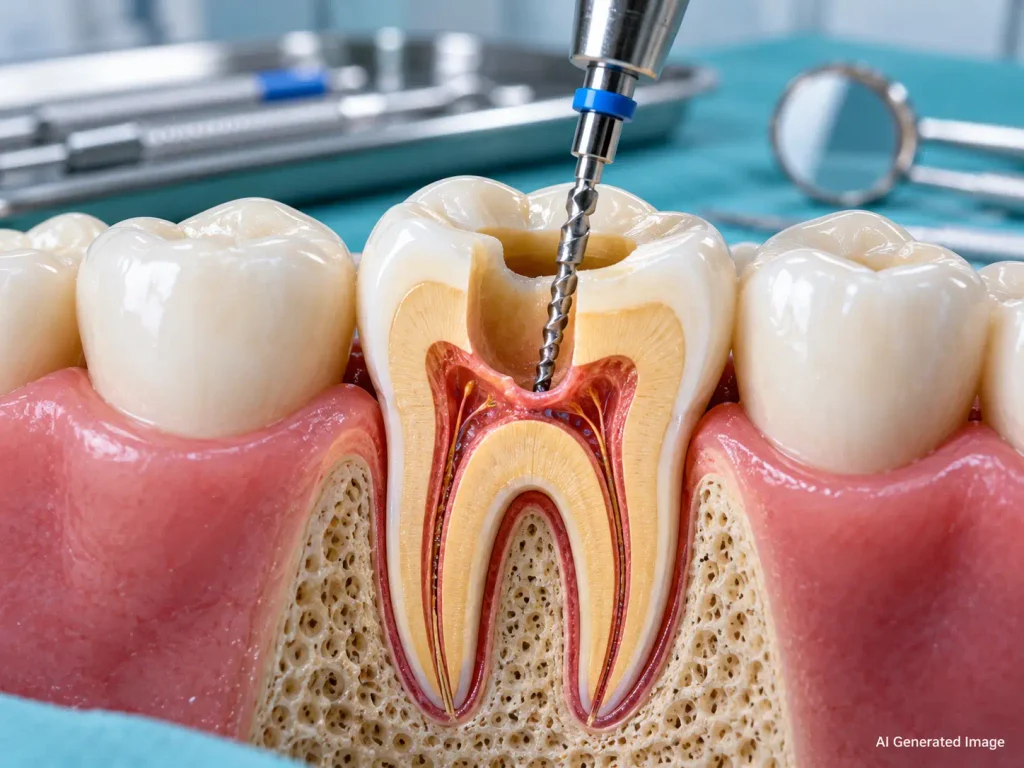
A root canal removes infected tissue from inside a tooth to save it from extraction. The procedure involves cleaning, disinfecting, and sealing the tooth's root canals through a highly controlled, step-by-step process.
Before the procedure: exam, X-ray, and numbing
Examination and X-rays: The dentist examines the tooth and takes digital X-rays to map the shape of the root canals and assess the extent of the infection.
What you’ll feel: You will feel no discomfort, just the brief pressure of the X-ray sensor against your cheek.
Local anaesthetic: A localised numbing medication is applied to the gums, followed by an injection of local anaesthetic to completely block pain.
What you’ll feel: A quick, minor pinch from the needle, followed by a warm, heavy sensation as the area goes completely numb.
Dental dam placement: A small protective rubber sheet is placed around the target tooth to keep it dry and free of saliva during treatment.
What you’ll feel: Mild pressure or a light tug around the tooth as the dam is clamped into place.
During the procedure: Cleaning the tooth from the inside
Access opening: The dentist uses a precise dental drill to make a small opening in the top or back of the tooth to reach the inner chamber.
What you’ll feel: Vibrations and pressure from the drill, but absolutely no pain.
Pulp removal: The diseased, inflamed, or dead nerve tissue is carefully extracted from the pulp chamber and root canals.
What you’ll feel: Nothing at all, as the local anaesthetic completely desensitises the tooth's internal nerves.
Shaping and cleaning: Tiny flexible files and antibacterial rinsing solutions are used to sculpt, widen, and thoroughly disinfect the interior channels.
What you’ll feel: A slight tugging or scraping sensation inside the tooth, accompanied by the sound of rushing water.
Canal filling: The hollow, sterile canals are filled and sealed with a biocompatible, rubber-like material called gutta-percha.
What you’ll feel: A faint sensation of pressure deep within the root as the material is packed tightly.
After the procedure: protecting the tooth
Temporary filling: A temporary material seals the initial opening to prevent bacteria from entering before your final restoration.
What you’ll feel: You may feel the soft texture of the filling with your tongue, and the numbness will begin to fade.
Final restoration: During a follow-up visit, the temporary filling is replaced with a permanent filling or a custom-fitted protective dental crown.
What you’ll feel: Normal pressure as the permanent restoration is bonded, fully restoring your tooth's strength.
Note: In cases of severe or long-standing infection, your dentist may place an antibacterial medication inside the tooth and leave it to drain for a week before completing the final filling step.
How long does a root canal take?
The procedure typically takes 30 to 90 minutes per session and is usually completed in 1 to 2 appointments.
The exact duration depends on the tooth's condition, the extent of the infection, and the number of canals involved.
- Molars often take longer because they have more canals to clean and seal.
- You may need a separate appointment for a permanent crown.
After examining the tooth and reviewing the X-ray, your dentist can estimate the number of visits and expected treatment time.
How much pain is normal after a root canal?
Mild tenderness and sensitivity when biting for a few days after a root canal is normal, and most people notice improvement within three to five days.
Why it hurts: The surrounding tissue and bone become inflamed from the procedure, even though the inner nerve is gone.
Comfort tips: Eat soft foods, avoid chewing on that side, apply a cold compress, and use over-the-counter pain relief as your dentist advises.
Easy adjustment: A slightly high temporary filling can cause lingering pressure, which your dentist can quickly file down to relieve the discomfort.
When should you call your dentist after a root canal?
Contact your dentist if you experience any of the following:
- Pain that is severe, worsening, or not settling after a few days.
- Pain not eased by the pain relief your dentist suggested.
- Swelling, or a bite that feels uneven.
These symptoms may require a dental assessment. To evaluate your symptoms and get proper advice, contact the clinic for consultation details.
Is skipping a root canal less painful than having one?
No, skipping it is much more painful in the long run than having one.
An untreated infection tends to worsen and can lead to extraction. Extraction can cause bone loss, neighbouring teeth to drift, and a costlier implant or bridge later.
What happens If You Skip?
- Worsening Pain: Untreated infections may cause persistent, sharp, or throbbing pain.
- Temporary Relief: Sudden pain relief may indicate nerve death, not healing.
- Abscesses and Spread: Infections can spread to gums, jawbone, adjacent teeth, and potentially the bloodstream.
- Tooth Loss: Severe damage may require extraction and replacement with implants or bridges.
If you are in Newtown and looking for a root canal treatment clinic, enquire about available slots and timings!
Frequently Asked Questions
Does a root canal hurt more than a filling?
No. Local anaesthesia helps control discomfort, making the procedure comparable to routine dental treatments such as fillings.
Will I feel the injection?
You may feel a brief pinch or pressure during administration. Your dentist can use a topical anaesthetic to minimise discomfort.
Can a root canal be done without pain?
Yes. Local anaesthesia helps minimise discomfort during treatment, although mild tenderness may occur afterwards as the surrounding tissues recover.
How long does a root canal take, and how many visits are needed?
Treatment typically takes 30–90 minutes and requires one or two visits, depending on the tooth's condition and complexity.
How long will my tooth hurt after a root canal?
Mild tenderness usually subsides within a few days. Contact your dentist if discomfort worsens, persists, or occurs with swelling.
What can I take for pain after a root canal?
Your dentist may recommend pain relievers based on your symptoms, medical history, current medications, and individual health needs.
When can I eat after a root canal?
Wait until numbness wears off before eating. Choose soft foods, and avoid chewing on the treated tooth until it's properly restored.
Do I need a crown after a root canal?
Often, yes. A crown helps protect weakened teeth, particularly molars, restoring strength and reducing the risk of fractures.
Is a root canal safe during pregnancy?
Generally, yes. Necessary treatment can be performed during pregnancy with appropriate precautions, suitable anaesthesia, and guidance from your dentist.
What happens if I don’t get a root canal?
The infection may worsen, potentially causing an abscess, spreading to surrounding tissues, or resulting in tooth loss.
………………………………………………………………………………………………………
Medical Disclaimer:
This content is for informational purposes only and does not replace professional dental advice, diagnosis, or treatment.