
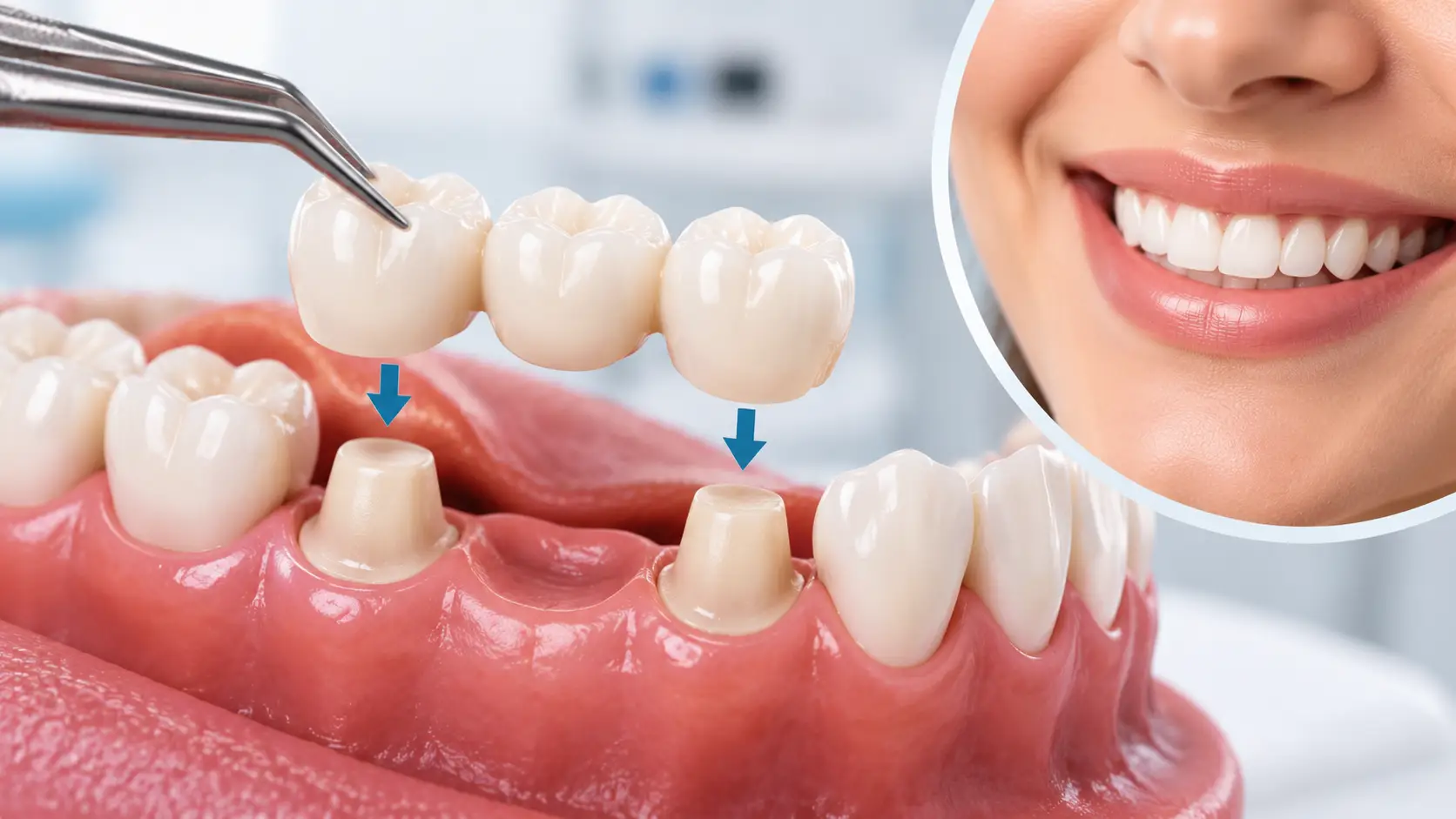
A dental bridge replaces one or more missing teeth. The dentist anchors an artificial tooth (a pontic) to the natural teeth or implants beside the gap. Treatment usually takes two visits over two to three weeks. Most people feel comfortable within a few days, and a bridge with good care commonly lasts 5 to 15 years.
This guide covers who needs a bridge, the types, the procedure step by step, recovery, aftercare, cost, and how a bridge compares with implants and dentures.
Who Needs a Dental Bridge?
A bridge suits you if you have one or a few missing teeth and healthy teeth or bone around the gap. An untreated gap causes problems: nearby teeth drift, your bite shifts, chewing becomes uneven, and missing teeth change your jawbone and facial structure over time. A bridge can also help when bite problems come from an uneven or gapped bite.
You are usually a good candidate if you have:
- Healthy, strong teeth (or enough bone for implants) next to the gap
- Healthy gums with no untreated gum disease
- Good daily oral hygiene
A bridge may not suit you if several teeth in a row are missing, the neighbouring teeth are weak, or you have active gum disease.
Types of Dental Bridges and Materials
| Type | How it works | Best for |
|---|---|---|
| Traditional | Crowns on both neighbouring teeth hold the pontic | Most common; one or two missing teeth |
| Cantilever | One neighbouring tooth supports the pontic | Gaps with one strong neighbour, low-stress areas |
| Maryland (resin-bonded) | Metal or ceramic wings bond to the back of neighbouring teeth | Front teeth; needs less tooth reduction |
| Implant-supported | Dental implants anchor the pontic | Multiple missing teeth; no filing of natural teeth |
Common materials:
- Zirconia: very strong and natural-looking; suits front and back teeth
- Porcelain-fused-to-metal (PFM): strong, but a thin metal line may show at the gum
- All-ceramic: the most natural look, best for front teeth
- Metal alloys: highly durable but visible, so dentists rarely use them, mostly at the back
For a fuller comparison, read our guide to the types of dental crowns and bridges. Implant-supported options fall under dental implants in Newtown.
Before the Procedure
The first visit is a consultation. Your dentist examines your mouth, reviews your medical and dental history, takes X-rays, and discusses the bridge type and material with you.
Your dentist treats any problems that could affect the bridge first:
- Gum disease: it weakens the supporting teeth, so never ignore bleeding gums. A professional tooth cleaning often comes first.
- Decay: a tooth filling treats cavities in the supporting teeth.
- Nerve damage: if a supporting tooth has a deep infection, you may need root canal treatment before the dentist prepares the crown.
Dentists normally prepare the teeth under local anaesthesia, so you stay awake and comfortable. They consider sedation only for very anxious patients and give you fasting instructions if it applies.
Dental Bridge Procedure: Step by Step
Visit 1: Preparation
- The dentist numbs the area.
- The dentist reshapes the supporting teeth so crowns can fit over them. This enamel removal is permanent.
- The dentist takes impressions or a digital scan and matches the shade to your natural teeth.
- You leave with a temporary bridge, and the dentist sends the impressions to the dental lab.
Visit 2: fitting (usually two to three weeks later)
- The dentist removes the temporary bridge.
- They try the permanent bridge on and check the fit, colour and bite.
- They make any adjustments and cement the bridge in place.
Temporary bridge: It protects the prepared teeth and keeps your smile intact, but it is fragile and sits on weak cement. Avoid sticky, hard and chewy foods, chew on the other side, and call your dentist if it comes loose.
Recovery: What to Expect in the First Days and Weeks
- First few hours: the numbness wears off, and your gums feel tender.
- First few days: mild sensitivity to hot and cold is common, and the bridge may feel slightly bulky.
- First one to two weeks: your bite and speech adjust, and the sensitivity settles.
Contact your dentist if the bridge feels high or loose, if pain or sensitivity lasts beyond two weeks, or if you notice swelling, a bad taste or bleeding around the area.
Dental Bridge Aftercare
A bridge cannot decay, but the teeth and gums beneath and around it can, so cleaning matters.
- Brush twice daily with fluoride toothpaste and angle the brush toward the gumline.
- Clean underneath daily with floss threaders, super floss, interdental brushes, or a water flosser. Regular floss cannot pass under the pontic.
- Foods: stick to soft foods for the first few days. Long term, avoid biting ice, hard sweets, and sticky toffee.
- Night guard: ask about one if you grind your teeth.
- Check-ups: visit your dentist every six months. Skipping check-ups can be risky because you cannot easily spot problems under a bridge yourself.
Dental Bridge vs Implant vs Partial Denture
| Factor | Dental bridge | Dental implant | Partial denture |
|---|---|---|---|
| Treatment time | 2–3 weeks | Several months | A few weeks |
| Neighbouring teeth | Dentist reshapes them | Stay untouched | Clasps may strain them |
| Jawbone | Does not prevent bone loss | Helps preserve bone | Does not prevent bone loss |
| Fixed or removable | Fixed | Fixed | Removable |
| Typical lifespan | 5–15 years | Often decades with care | Around 5–10 years |
| Upfront cost | Moderate | Highest | Lowest |
A bridge works faster and needs no surgery. An implant protects neighbouring teeth and bone but takes longer and costs more upfront. Our comparison of dental implants vs dentures explains the removable option in more depth, and denture treatment suits you if you prefer something removable.
Dental Bridge Cost in Kolkata and India
Clinics price bridges per unit, meaning each crown and pontic in the span. A traditional bridge that replaces one tooth has three units. The final cost depends on:
- Material: zirconia and all-ceramic usually cost more than metal-based options
- Number of units and the type of bridge
- Extra treatment such as gum care, fillings, or root canals
- Clinic and laboratory quality
Ask for a written estimate that covers every stage. You can review our general treatment charges and, if you are weighing an implant, the dental implant cost guide.
How Long Does a Dental Bridge Last? Risks and Problems
With good care, a bridge lasts 5 to 15 years, and sometimes longer. Possible problems include:
- Decay or gum disease in the supporting teeth
- A loose, chipped, or fractured bridge
- Sensitivity, or nerve irritation in a prepared tooth
- Permanent reduction of healthy neighbouring teeth
Good hygiene, regular check-ups and soft chewing habits lower these risks.
Dental Bridge Before and After
Case photos show what a bridge can do: a closed gap, an even smile line and balanced chewing. See real examples in our smile gallery.
Frequently Asked Questions
Is getting a dental bridge painful?
No. The dentist numbs the area, so you feel pressure but not pain. Mild soreness afterwards usually settles within a few days.
How many visits does a dental bridge need?
Usually two: one for preparation and a temporary bridge, and one to fit the permanent bridge two to three weeks later. You may need extra visits if other dental work comes first.
Can I eat normally with a dental bridge?
Yes, once the dentist cements the permanent bridge and any sensitivity settles. Stick to soft foods for the first few days and avoid very hard or sticky foods long term.
What happens if a dental bridge falls off?
Keep the bridge, avoid chewing on that side, and see your dentist promptly. Do not glue it yourself. Early recementing usually saves it.
Is a dental bridge better than an implant?
Neither suits everyone. A bridge works faster and needs no surgery, while an implant spares neighbouring teeth and helps preserve bone. Your bone health, budget, and timeline decide.